As a hydraulic piston pump supplier, I get this question all the time from customers exploring more sustainable fluid power solutions: Can hydraulic piston pumps be used with water-based fluids? For years, the industry default was mineral oil—cheap, reliable, and compatible with most traditional pump designs. But as regulations push for lower environmental impact, companies are turning to water glycols, biodegradable synthetics, and even plain water. The short answer is yes, but there’s a lot more to it than just swapping fluid. Let’s break down what works, what doesn’t, and how to make it work for your operations. Hydraulic Piston Pump
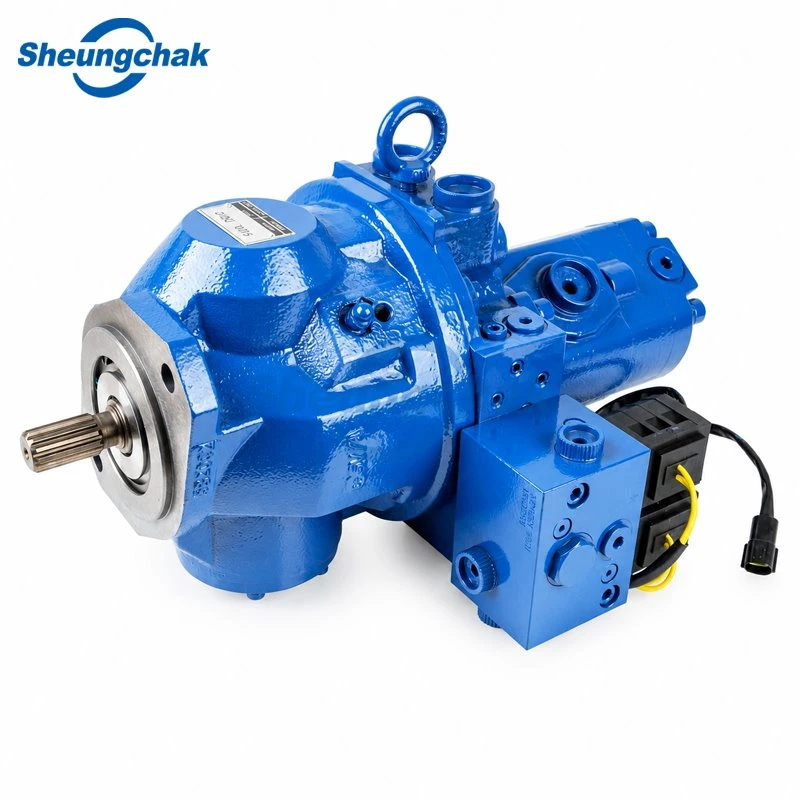
First, let’s set the stage: water-based fluids aren’t a new invention. They’ve been used in high-fire-risk applications like steel mills and coal mines for decades, thanks to their non-flammable nature. The problem with using them with standard hydraulic piston pumps boils down to two things: corrosion and lubrication. Water is an excellent conductor, so if your pump’s internal components (pistons, cylinders, valve plates, and bearings) are made of uncoated steel or iron, you’re looking at rapid rust and pitting that will destroy the pump in weeks, not years. And unlike mineral oil, which has natural lubricating properties, water-based fluids have almost no ability to reduce friction between moving parts. Run a standard piston pump with water and you’ll get metal-on-metal wear, seizing, and total system failure fast.
That said, modern hydraulic piston pump designs are built specifically to solve these two pain points. Let’s talk about component materials first. At our company, we’ve engineered our water-compatible piston pumps with surface treatments that act as both corrosion barriers and lubricants. Take our series 10 axial piston pump, for example: its steel pistons are coated with a thin layer of chrome oxide, which resists rust and provides a low-friction surface that doesn’t wear down when exposed to water. The cylinder block and valve plates are made from high-grade stainless steel with a proprietary nitriding process that creates a hard, corrosion-resistant shell. Even the bearings—typically made of bronze in standard pumps—are replaced with self-lubricating polymer composites that hold up against water’s tendency to wash away lubricating film. This isn’t just a coating; it’s a design change that every serious pump manufacturer has adopted for water-based applications over the last 15 years.
Next, lubrication additives. You can’t just pour tap water into a pump and expect it to work—unless, of course, it’s a specialized design. Most water-based fluids sold today for hydraulic systems are formulated with anti-wear (AW) and extreme pressure (EP) additives tailored for piston pumps. These additives cling to metal surfaces, create a protective film, and prevent scuffing when the pistons slide against the cylinder wall. One common mix is water glycol, a 60% water / 40% glycol blend that balances corrosion protection, lubricity, and stability. For even more demanding environments, there are biodegradable water-based fluids that use vegetable-based additives instead of synthetic glycols, perfect for offshore or agriculture operations where leaks could harm the ecosystem. It’s critical to match the fluid to the pump: our pumps are tested with three main water-based fluid types—water glycol, synthetic ester-based water fluids, and high-purity water—and each requires a slightly adjusted operating temperature and pressure range, which our engineering team outlines in every pump manual.
Now, let’s address the elephant in the room: pressure and efficiency. Traditional piston pumps operate at pressures up to 5,000 PSI or higher, and water-based fluids can handle that—if the pump is designed for it. We’ve run our water-compatible pumps at 4,500 PSI in continuous duty cycles for steel mill testing, and they performed on par with mineral oil versions, as long as the fluid is properly maintained. The catch is that water has a lower viscosity than mineral oil, which means it leaks through clearances in the pump more easily. That means you need to adjust the pump’s internal clearances to be smaller—our pumps have precision-ground clearances (as low as 5 microns) that keep fluid in the pumping chamber instead of slipping past the pistons, maintaining efficiency. Without that adjustment, you’ll lose up to 20% of the pump’s power to leakage, which defeats the purpose of switching to water-based fluids in the first place.
I’ve seen this go wrong more times than I can count. A customer came to us last year with a cheap, off-brand axial piston pump that they tried to run with straight water for a food processing line. They skipped the corrosion coatings and clearances, and after three days, the pump’s pistons were seised solid. The metal parts were so corroded that we couldn’t even rebuild it. That’s why it’s so important to work with a supplier who specializes in water-compatible designs—you don’t want to cut corners on component materials or precision machining. The right pump will not only work with water-based fluids but will often outperform standard pumps in some applications: for example, in high-temperature environments where mineral oil would break down, water-based fluids remain stable and our pumps handle the heat without failing.
Another common question: what about plain water, not water glycol? Can you use that with hydraulic piston pumps? The short answer is rarely, unless it’s a low-pressure, intermittent application. Plain water has almost no lubricity, so even a coated pump will wear faster over time. We do offer a specialized line of pumps for seawater applications, used in offshore oil and gas, that have diamond-like carbon (DLC) coatings on the pistons and valve plates—these can handle low-pressure (up to 1,500 PSI) seawater for extended periods, but they’re not designed for heavy-duty industrial use. For most operations, water glycol is the sweet spot: it’s affordable, available, and compatible with the majority of our water-based piston pump models.
Let’s talk about real-world use cases to make this concrete. A textile manufacturer we supply uses our 15 GPM axial piston pumps with 50/50 water glycol to power their looms. They switched from mineral oil to meet EPA requirements, and they’ve reported a 15% reduction in maintenance costs over two years because the fluid doesn’t break down as quickly at the looms’ operating temperature. A construction equipment maker uses our bent-axis piston pumps with biodegradable water fluid for their hydraulic excavators, which work in wetlands where a mineral oil leak could contaminate the water. Both customers are running their pumps at full capacity, 24/7, with no major failures—proof that the design works.
Of course, there are maintenance considerations that come with water-based fluids. You have to monitor the fluid’s pH level—water can become acidic over time, which accelerates corrosion if left unaddressed. Our pumps include in-line filters and pH sensors as optional add-ons, and we provide a free maintenance checklist for every customer. You also have to keep the system clean: water-based fluids can trap bacteria, which form sludge that clogs pump valves. That’s a simple fix with regular fluid testing and filter changes, which is part of our customer support package.
So, circling back to the original question: Can hydraulic piston pumps be used with water-based fluids? The answer is a resounding yes—if the pump is purpose-built for it. It’s not a one-size-fits-all swap; you can’t take a standard pump off the shelf and pour water into it and expect it to work. But for the right application, with the right pump and the right fluid, it’s not just possible—it’s often a smarter, more sustainable choice.

As a hydraulic piston pump supplier, we’ve spent years refining our water-compatible line to make this transition easy for our customers. Whether you’re looking to meet environmental regulations, reduce fire risk, or cut long-term maintenance costs, our team can help you select the right pump for your specific fluid and operating conditions. If you’re ready to explore switching to water-based fluids or have questions about our line of hydraulic piston pumps, reach out to our sales team to discuss your project in detail.
Orbital Motor References
- Hydraulic Institute. (2020). Water-Based Hydraulic Fluids: Selection and Application Guidelines. Hydraulic Standards and Publications.
- ISO 4406:2017. Hydraulic fluid power—Filtration—Classification of fluid contamination by solid particles. International Organization for Standardization.
- American National Standards Institute (ANSI)/B110.1-2018. Hydraulic Piston Pumps—Safety Requirements and Design Specifications. American National Standards Institute.
- Schröder, J., & Schwarze, H. (2019). Corrosion and Wear in Water-Hydraulic Systems. Wear, 432-433, 202-210.
Guangdong Sheungchak Hydraulic Technology Co., Ltd.
Guangdong Sheungchak Hydraulic Technology Co., Ltd. is one of the most professional hydraulic piston pump manufacturers and suppliers in China. We are committed to providing high quality customized products with competitive price. Please rest assured to wholesale durable hydraulic piston pump for sale here and get pricelist from our factory.
Address: Building 25, Liantang Industrial City, Shangcun Community, Gongming Subdistrict, Guangming District, Shenzhen, China
E-mail: info@hydraulicsc.com
WebSite: https://www.hydraulicsc.com/
