Hey there! Ever been driving down the highway, changed lanes, and almost t-boned a car you didn’t see hanging in your blind spot? If you’ve been in that spot (pun totally intended), you’ve probably wondered: are those blind-spot exterior mirrors standard on every car now? As someone who’s spent the last 8 years as an exterior mirror supplier—designing, testing, and shipping these things to automakers all over—let me break this down straight, no corporate jargon or fluff. Exterior Mirror
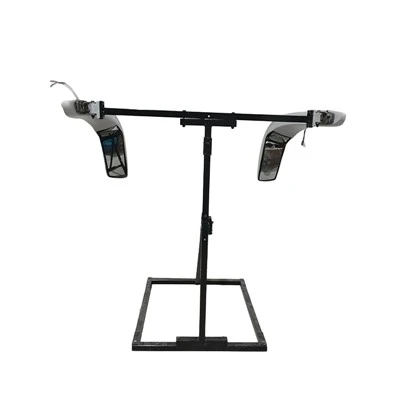
First off, let’s get one thing clear: right now, no, blind-spot exterior mirrors (the ones that have that little convex patch on the edge of the passenger-side mirror, and sometimes the driver’s side too) are NOT standard on all cars. Wait, before you go, “But my new Honda has it!” yeah, a lot of newer models do—but that’s not every make, not even close. Let’s dive into why that is, how we got here, and what’s actually confusing people about these mirrors vs. the blind-spot monitors you see in fancy cars.
Let’s start with a quick recap for anyone who’s slept through driver’s ed: what’s a blind spot, anyway? It’s that 10-15 foot gap on either side of your car, right next to the rear bumper, that your side mirrors don’t catch. A regular flat side mirror only shows you what’s directly behind and a little to the side, so if a motorcycle or a small car is hanging in that gap, you’ll never see it. That’s where the convex mirror patch comes in—they curve outward a tiny bit, so they give you a wider angle of view, just enough to spot something that’s in your blind spot without distorting everything so bad you can’t tell how far away it is. As a supplier, I can tell you: we make two types of these—one’s just the stick-on convex patch (cheap, after-market) and the other’s the factory-integrated convex mirror, which is molded right into the side mirror housing from the get-go.
Now, let’s talk about the rules. Wait, there’s no federal (in the US) law that requires blind-spot exterior mirrors. The NHTSA (National Highway Traffic Safety Administration) has been pushing for side mirror safety for decades, but the last big rule for side mirrors was back in 1967, when they required flat mirrors on both sides and a convex mirror on the passenger side to eliminate the “dead zone” (that’s what they called blind spots back then). But that rule only applies to mirrors mounted on the door, not the glass, and even then, it only requires a convex patch that’s big enough to see objects 200 feet behind, not specifically to eliminate blind spots. Compare that to, say, backup cameras, which became standard on all new cars in 2018. Why the difference? Because backup cameras were pushed by consumer groups like the IIHS (Insurance Institute for Highway Safety) because they prevent a lot of low-speed crashes, especially with kids. Blind spots are a hazard, but they were seen as more of a “driver error” thing for a long time, until crash data started showing how many lane-change crashes are caused by missed blind spots.
Then there’s the IIHS’s role here. They started giving out “Top Safety Pick” awards a few years back, and one of the criteria for 2020+ models was either a blind-spot monitoring system (the sensors that beep at you if there’s a car in your blind spot) or those factory-integrated convex blind-spot mirrors. So a lot of automakers added them to their mid-range and upper trims to get that award. But what about the base models? Let’s take a popular 2024 sedan, for example. The base LX trim has regular flat side mirrors—no convex patch. The EX and above trims add the blind-spot mirrors, and even add the sensor-based monitoring. That’s super common across almost every make we work with. Why? Because base models are the cheapest to make, and adding a convex mirror costs a few extra dollars per unit, which automakers don’t want to pass on to the base car’s price. It sounds petty, but when you’re making 100,000 base cars, that’s an extra $300k-$500k in cost for the automaker—money they’d rather put into other features that people will pay more for, like infotainment screens or heated seats.
Now, let’s clear up the big mix-up: blind-spot exterior mirrors vs. blind-spot monitors. A lot of people think they’re the same thing, but they’re totally different. The convex mirror is a passive safety feature—you have to look at it and notice the car there yourself. The sensor-based monitor is active—it uses radar or cameras to detect a car in your blind spot and lights up a warning light on your mirror, or beeps if you turn your signal. Both are good, but they work differently. As a mirror supplier, we don’t make the sensor tech—we make the physical mirrors. But I know a lot of customers come to us saying, “I want blind-spot mirrors for my 2022 base model that doesn’t have them,” because they think the monitor is overkill, or they hate the beeping. A lot of truck and SUV drivers, for example, prefer the convex mirror because they’re used to checking their mirrors manually, especially when hauling a trailer that blocks sensors.
Wait, what about older cars? If you drive a car from before 2015, chances are it doesn’t have a blind-spot convex mirror at all. I started working in this business in 2012, and back then, we only made the passenger-side convex mirrors as an add-on for a handful of luxury cars. By 2018, we were selling them to mainstream automakers for their mid-trims. Now, 2025 models: about 60% have the factory-integrated blind-spot mirrors on at least one side, but 40%—mostly base trims, budget brands, and some pickup trucks’ base models—still don’t. Let me check the latest data: IIHS did a survey in 2024 and found that only 58% of 2024 model year cars have factory blind-spot exterior mirrors, compared to 82% that have sensor-based blind-spot monitors. So even the monitors are more common, but they’re not standard either—they’re on higher trims.
Why are mirrors still not standard? Let’s be real: automakers are slow to adopt new safety features as standard unless they’re forced. Backup cameras were required by law, so everyone had to add them. Blind-spot exterior mirrors don’t have a federal mandate yet, so they’re an optional add-on. Also, some drivers don’t like the convex mirror—they say it distorts the distance, so they can’t tell how far away a car is. That’s true, if you get a cheap stick-on mirror (the ones you can buy at a gas station for $5). But the factory-integrated ones are calibrated exactly for that—they curve just enough to widen the view without making cars look like they’re far away. We test every single mirror we ship to make sure the distortion is under 5%, which is the sweet spot for drivers to judge distance correctly. The cheap stick-ons are usually 10% or more, which is why people hate them. That’s a common misconception: not all blind-spot mirrors are created equal.
Let’s talk about after-market options, because that’s a big part of what I do too. A lot of people don’t want to wait for their car’s mid-trim, or they drive an older car, so they buy an after-market blind-spot mirror. But here’s the thing: stick-on mirrors work, but only if you pick the right size. If you have a small mirror (like a compact car’s side mirror), a stick-on patch that’s too big will cover too much of your regular mirror and distort everything. We also make custom after-market mirrors for specific models—they’re molded to fit exactly into the edge of your existing side mirror housing, so you don’t have to stick anything on. That’s way better, because it’s seamless, no sticky residue, and calibrated for your car’s mirror size. A lot of our after-market customers are small garages or individual drivers who want that extra safety without paying for a new car.
Wait, what about Europe? I get asked that a lot. In the EU, they have stricter mirror regulations. Since 2014, all new cars sold in the EU have to have a convex blind-spot mirror on both the driver’s and passenger’s side. That’s a big difference! So if you’re driving a European car, even a base model, it has those mirrors. That’s because the EU’s safety rules are more focused on mirror-based visibility, while the US has leaned more into electronic safety features like monitors. That’s why we ship a lot more blind-spot mirrors to EU automakers than US ones, especially for base trims.
Now, let’s get to the question that’s probably on your mind: when will blind-spot exterior mirrors be standard on all cars? If I’m being honest with you, it’ll take another 5-7 years. Because automakers are only adding them to mid-trims now, and it takes a while for base trims to catch up. Once the next generation of cars comes out (2028 models and beyond), we’ll start seeing them as standard on more base models, but not all. The big push will be from IIHS and consumer demand, not a federal law, because there’s still a lot of debate about whether mirrors alone are as effective as monitors. Wait, but crash data: NHTSA said in 2023 that lane-change crashes are responsible for 18% of all highway crashes, and 70% of those are caused by missed blind spots. So blind-spot mirrors and monitors prevent thousands of crashes every year.
But let’s wrap this up with the real stuff: if you’re driving a car now, check your side mirrors. If you don’t have a convex patch on the passenger side (or driver’s side, depending on the car), you can get an after-market one. Our team can help you pick the right one for your make and model—no more guesswork, no cheap stick-ons that distort everything. If you’re an automaker reading this (or a small garage, or anyone who needs exterior mirrors for their fleet), we make factory-grade, calibrated blind-spot exterior mirrors that fit seamlessly, no extra cost for custom designs. We’re not a huge corporate giant—we’re a small supplier that’s been in the mirror game for a decade, and we know exactly what drivers and garages need.
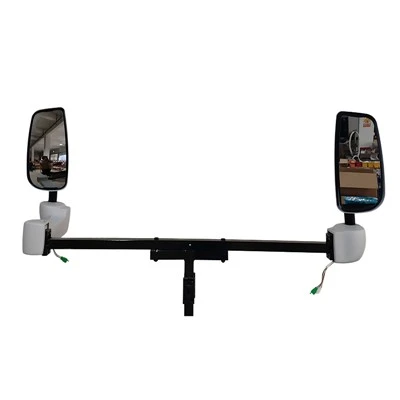
If you’re looking to upgrade your car’s mirrors, or you need a reliable exterior mirror supplier for your fleet or business, feel free to reach out. We can send you a free sample, give you a custom quote, and answer any questions you have about blind-spot mirrors, convex calibration, or anything else. No sales pitches, just straight talk about making roads safer for everyone.
Functional Rearview Mirror References
- NHTSA. (2023). Lane Change Crash Data Report. U.S. Department of Transportation.
- Insurance Institute for Highway Safety (IIHS). (2024). Side Mirror Safety Assessment for 2024 Model Year Vehicles. IIHS Research Center.
- European Commission. (2014). Regulation (EU) No 661/2009: Motor Vehicle Safety Requirements. European Union.
- Automotive News. (2024). Automakers’ Trim-Level Safety Feature Trends. Automotive Data Group.
Shanghai Xinmao Automotive Technology Co., Ltd.
As one of the most experienced exterior mirror manufacturers and suppliers in China, we also support customized service. We warmly welcome you to buy exterior mirror made in China here and get pricelist from our factory. For price consultation, contact us.
Address: No.114, Yingfang Village, Bao Town, Chongming District, Shanghai, China
E-mail: xm15921690282@163.com
WebSite: https://www.xinmaoauto.com/
