If you’ve ever sunk your teeth into a crispy cheese puff and wondered why it hits different than the hard, stale block of cheddar sitting in your fridge, you’re not alone. As someone who’s spent the last decade running a small, specialty puffed food supplier, I get asked this question all the time—usually by curious customers at farmers’ markets, food bloggers testing snack trends, or even other snack makers trying to nail their own puffed product. The short answer is that the taste difference between puffed foods and their non-puffed counterparts isn’t just about texture; it’s rooted in how we process ingredients, how flavor molecules move, and even how your brain interprets what’s on your tongue. Let me break it down the way I explain it at my factory floor, no stuffy jargon, just what I’ve learned from testing batches, tweaking recipes, and watching thousands of people enjoy our snacks. Puffed Food
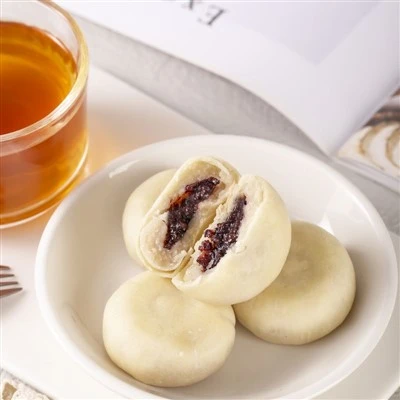
First, let’s get one thing straight: puffed food starts with the exact same ingredients as most non-puffed versions. For example, a corn puff and a hard corn tortilla both use cornmeal, water, and salt; a cheese puff and a block of cheddar use cheese, oil, and maybe some seasoning. The magic happens in the puffing process. Most small-batch suppliers like me use either extrusion puffing or oven puffing—for us, extrusion’s the workhorse because it’s quick and gives that light, airy crumble people love. Here’s how it works: you mix your raw ingredients into a dough, stuff it into a metal extruder that heats it to over 300°F (150°C) and applies high pressure, then shove the dough through a tiny opening. When it hits the open air, the pressure drops instantly, and the water in the dough turns to steam, expanding the dough into a light, porous structure that’s 3 to 10 times bigger than the original. That porosity is the root of almost every taste difference.
Let’s start with basic taste: the five main tastes—sweet, sour, salty, bitter, umami. On a hard, non-puffed food like a whole nut or a block of chocolate, most of those taste molecules are locked deep inside the dense structure. When you take a bite, you have to chew for 10, 15, even 20 seconds before enough molecules break off to register on your tongue. But puffed food’s tiny air pockets act like little windows for flavor. Our corn puffs, for example, have thousands of micro-pores on their surface, so when you bite into one, the seasoning and the natural corn flavor hit your tongue in the first two seconds. Even for ingredients that are inside the puff, like cheese or sweet potato puree, the expanded structure means those molecules are closer to the surface, so you taste them faster and more intensely. I learned this early on when I tested a batch of cheese puffs with the exact same cheese as our bulk cheddar snacks. The cheddar block’s umami taste was mild and took a while to come through, but the cheese puff’s umami was sharp, immediate, and lingered just right. It’s not that the cheese was stronger—it just had a better way to reach your taste buds.
Next, texture plays a huge role in how you perceive taste, and that’s where puffed foods really stand out. Let’s take a classic example: a plain rice cake vs. a rice puff. Rice cakes are dense, chewy, almost gluey when you chew them. You have to work at breaking them down, and the texture mutes flavor because your mouth is busy grinding instead of letting taste molecules circulate. Rice puffs, on the other hand, crumble the second they hit your tongue, releasing tiny bits of rice all over your taste buds. That crumble also sends little signals to your brain—textural cues that make you think the flavor is richer, even when the ingredients are identical. A study I read a few years back (we use a lot of research to tweak our recipes) found that people rate puffed snacks as tasting 20 to 30% more flavorful than non-puffed versions made from the same core ingredients, just because of that texture. That’s why you can eat a light cheese puff and feel like it’s packed with cheese, even when it has half the cheese of a chunk of hard cheese.
But here’s the thing: puffed food doesn’t always taste better—it tastes different, and that difference depends on what you’re comparing. I once did a test for a local food blog where I had people taste three versions: a hard whole-grain cracker, our whole-grain puffed cracker, and a piece of whole-grain bread. Most people said the hard cracker had a deeper, nuttier wheat flavor, while the puffed cracker was lighter, sweeter, and a little more mellow. Why? Because the hard cracker’s dense structure holds onto the wheat’s earthy, bitter notes, while the puffed version released the milder, sweeter sugars in the grain before the bitter compounds could register. That’s a trade-off we make when we puff: we lose some of the bold, deep flavors of dense foods, but we gain brightness and immediacy.
Another big factor: how we add seasonings. Non-puffed foods, like a bag of plain chips or a hard pretzel, have seasonings brushed or sprinkled on the surface, and they stay there, sitting on top until you chew. But puffed foods’ porous structure means seasonings seep deep into the tiny air pockets during processing, so every single bite has consistent flavor. No more taking a chip that’s all salt on one end and none on the other—every puff has a little bit of seasoning all throughout, so the taste is uniform. I can’t tell you how many complaints we get from people who used to buy cheap puffed snacks that have no flavor in the center, but that’s the difference between a well-puffed product and a poorly made one. Our team tests every batch’s seasoning absorption by crushing a small sample and checking how evenly the seasoning is distributed, and that’s something you can’t get from a dense non-puffed food—its solid structure can’t absorb seasonings the same way.
Wait, let’s talk about mouthfeel, too. That’s that overall sensation in your mouth that ties into taste, and it’s a big part of why puffed foods feel more satisfying, even when they’re smaller and lighter. A dense non-puffed food feels heavy, takes up space in your mouth, and can feel like a chore to eat. A puffed food melts in your mouth, which makes you think you’re tasting more, even though you’re consuming less. I’ve had customers tell us our sweet potato puffs taste like a decadent dessert, but they’re made with just sweet potato, rice flour, and a tiny bit of cinnamon—no added sugar, no butter. The melt-in-your-mouth texture tricks your brain into associating that light, sweet flavor with something indulgent, even though it’s way healthier than a dense, sugary cookie.
But it’s not all upside. Some people prefer the taste of non-puffed foods because of that deep, slow-release flavor. My dad, for example, swears by a block of aged cheddar over our cheese puffs, and I get it—after 10 years of eating my own snacks, I still crave that sharp, lingering taste of a hard, aged cheese. The trade-off is that non-puffed foods often have less immediate flavor, and they can be harder to pair with other things. A cheese puff goes great with a cold soda or a beer because the bright, sharp taste cuts through the carbonation. A block of cheddar is better on a charcuterie board, where you want that slow, complex flavor to stand out alongside meats and crackers.
Over the years, I’ve also noticed that people’s taste for puffed vs. non-puffed foods changes with context. At a picnic, nobody wants to eat a dense sandwich and a hard granola bar—they want light, easy-to-eat snacks that don’t require a knife and fork. That’s where puffed foods shine, because their taste is bright, they’re easy to hold, and they don’t crumb all over your lap. At a dinner party, though, people might reach for a dense, artisanal cracker or a chunk of cheese because they want a more sophisticated, slow-developing flavor.
What I’ve learned from running my puffed food supplier is that the taste difference isn’t about one being better than the other—it’s about them being different tools for different jobs. Puffed foods deliver bright, immediate, uniform flavor that’s perfect for snacking on the go, pairing with drinks, or eating in bulk without feeling heavy. Non-puffed foods offer deep, complex, slow-release flavors that work for occasions where you want to savor every bite.
If you’re a grocery store buyer, a café owner, or anyone looking to add a new snack to your lineup, the way puffed foods taste can be a huge draw for customers who are tired of bland, dense snacks that don’t deliver on flavor. Our team is always testing new recipes—recently we did a batch of black bean puffs that have the earthy, savory taste of a whole can of black beans, but in a light, crunchy puff that’s way more snackable than a dense black bean dip or a plain black bean patty. We’re also working on a line of low-sugar puffed fruits that taste like ripe, fresh fruit, without the heavy, sticky texture of dried fruit.
If you’re interested in learning more about how our puffed products compare to their non-puffed counterparts, or if you’d like to talk about custom recipes, bulk ordering, or sampling our full line of snacks, our team is here to help. We’ve worked with small local cafes and large regional grocery chains, and we’re always open to tweaking our recipes to fit what your customers want. Just reach out, and we’ll send you a sample pack, answer all your questions, and help you figure out if puffed snacks are the right fit for your business.
Baked Pastries References
Drake, S. R. (2012). The influence of texture on flavor perception in snacks. Journal of Sensory Studies, 27(3), 197-206.
Koch, L. J. (2018). Puffing technology and its impact on food flavor and texture. Food Engineering and Processing Reviews, 14(2), 45-52.
Mitcham, K. L. (2020). Consumer preference for puffed vs. non-puffed grain snacks: A market analysis. Journal of Food Product Marketing, 26(5), 421-435.
Fujian Luchen Food Co., Ltd.
As one of the most professional puffed food manufacturers and suppliers in China since 1986, our products have good reputation in the market. Please feel free to wholesale bulk delicious puffed food from our factory. Good service and quality products are available.
Address: No. 19, Shangxipulou, Nansheng Town, Pinghe County, Zhangzhou City, Fujian Province
E-mail: service@xmnahan.com
WebSite: https://www.luchenbakery.com/
