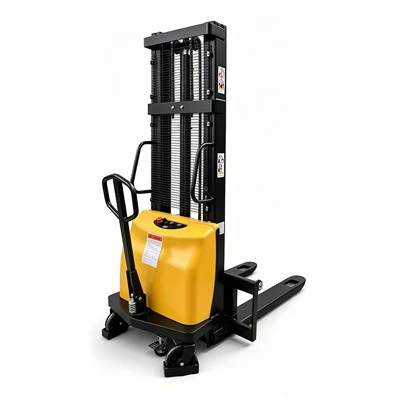
If you’ve ever needed to reach high, hard-to-access spots on a job site—whether it’s trimming large trees at a commercial property, replacing light fixtures on a warehouse’s high ceiling, or performing maintenance on an industrial crane—chances are you’ve encountered two of the most common pieces of lifting equipment: telescopic boom lifts and articulating boom lifts. As someone who’s spent years supplying telescopic boom lifts to construction, arborist, and industrial maintenance teams across the region, I can’t tell you how many times I’ve gotten calls from new operators or small business owners asking, “Which one do I actually need?” It’s not a trivial question—picking the wrong lift can lead to wasted time, extra costs, or even safety risks on the job. Telescopic Boom Lift
Let’s start with the basics: both types of boom lifts fall under the category of aerial work platforms (AWPs), designed to lift personnel, tools, and materials to elevated work areas. They both have that iconic boom arm that extends upward and outward, a platform at the end, and a base that sits on the ground for stability. But that’s where the similarities end. The core difference lies in how their booms move, and that single distinction changes everything about where and how you can use each one.
First, let’s break down the telescopic boom lift. If you’ve ever seen a crane with a long, straight arm that extends in a single, smooth motion, that’s the closest visual for a telescopic boom. The arm is made of nested sections, like a collapsible telescope, that slide straight out to reach heights—sometimes as high as 185 feet, depending on the model. What makes this boom special is its linear, extend-only design. It doesn’t bend or joint; it just grows longer in a straight line. That’s why they’re often called “straight boom lifts” by folks who work with them day to day.
At my company, we specialize in telescopic boom lifts for a reason: they’re unmatched for jobs that demand maximum vertical reach with minimal horizontal obstruction. Let’s say you’re standing at ground level, and you need to reach the peak of a 100-foot tall building that’s 50 feet back from your base. A telescopic boom can extend straight upward to full height, then push out horizontally from the base to reach that exact spot, with no gaps or curves in the arm. This makes them ideal for jobs where you have a clear, unobstructed path to your target height—like constructing high-rise buildings, installing signage on the sides of tall warehouses, or doing utility line work where you need to reach specific points along a straight vertical line.
The engineering behind a good telescopic boom is focused on power and stability. The nested steel sections are built to handle heavy loads—our standard model can lift up to 500 pounds, enough for two workers plus their tools and materials—even when fully extended. The base of the lift is wide and heavy, with outriggers that extend out to the sides and sometimes front and back to distribute weight evenly, keeping the platform steady when it’s positioned at maximum height. That stability comes with a tradeoff, though: telescopic booms are less maneuverable in tight spaces. Because their arm only extends straight out, they need more clearance around them to position correctly. If you’re working on a job site with a lot of obstacles—like trees, other pieces of equipment, or the side of a building—you’re going to run into trouble getting a telescopic boom into place.
Now, let’s talk about articulating boom lifts, often called “knuckle boom lifts” by anyone who’s operated them. Unlike the straight, single-arm design of a telescopic boom, an articulating boom is made up of multiple connected sections, or joints, that bend like a human arm. Most models have two or three joints: one at the base, connecting to the lift’s turret, then one or two more along the arm itself. This design lets the arm bend, curve, and reach around obstacles that would stop a telescopic boom cold.
For example, if you need to work on a light fixture that’s tucked under an overhang of a building, or trim a branch that’s behind a thick tree trunk, an articulating boom can maneuver right into that spot. The joints let you “reach over, under, and around” obstacles, which is why they’re the go-to lift for arborists, small construction jobs, and indoor work in crowded facilities like malls or convention centers. An articulating boom’s maximum height is usually lower than a telescopic boom—most top out around 150 feet, compared to 185 for a heavy-duty telescopic model—but their versatility in tight spaces makes up for that shorter reach for many jobs.
Another key difference is how these two lifts move. Telescopic booms typically have a vertical range that’s close to their horizontal range; in other words, if your telescopic boom is extended straight up 100 feet, it can reach out another 80 or 90 feet horizontally from the base. Articulating booms, on the other hand, have a much tighter horizontal reach relative to their height. A 120-foot articulating boom might only reach 50 or 60 feet horizontally, because its joints are designed to curve, not stretch. That’s not a downside for their intended use—it’s a feature. For tight spaces, being able to curve the arm back toward the base after lifting is far more useful than long straight horizontal reach.
Let’s get into a real-world example that comes up all the time in my line of work. Last year, I worked with a commercial property manager who needed to replace 20 light fixtures on the parking lot canopy of a big-box store. The canopy was 60 feet high, and the support columns for the canopy were spaced every 20 feet along the 300-foot length of the lot. The ground around the columns was covered in concrete and had some low landscaping barriers, so there wasn’t a lot of room to position a lift. The property manager first looked at a telescopic boom, because of the height, but when he measured the space, there was only 18 feet between the column and the landscaping barrier—way too narrow for a telescopic boom, which needs at least 25 feet of clearance to extend safely. We recommended an articulating boom instead, and the operator was able to position it next to each column, bend the arm out around the column, and reach every light fixture without moving the lift more than twice. That job would have been delayed for days if he’d gone with a telescopic boom, because he would have had to move it every three columns instead of every 10, or even rent a lift that could reach over the landscaping, which would have cost twice as much.
Conversely, a construction foreman I worked with earlier this year was building the frame of a 12-story office building. He needed to lift steel beams and workers to the top of the frame, which was 140 feet above ground, with a clear, open space between the base of the lift and the top of the building. A telescopic boom was the perfect choice here—its straight arm could reach the exact spot he needed, and its heavy lift capacity meant he could carry 500 pounds of steel and two workers at the same time. If he’d used an articulating boom, he would have had to make twice as many trips because of its lower lift capacity and shorter maximum height, which would have pushed his project deadline back by a week.
Safety is another big factor to consider, and both lifts have their own safety protocols that align with their designs. Telescopic boom lifts have a lower risk of arm collision with obstacles, because their straight path is easier to calculate—operators can visually confirm that there’s nothing in the way before extending the arm. But because they need more clearance, they’re at higher risk of tipping if they’re positioned too close to uneven ground or obstacles, so proper setup of outriggers is non-negotiable. Articulating boom lifts, on the other hand, have more moving parts, so operators need extra training to avoid joint collisions. The ability to bend around obstacles also means it’s easier to accidentally get the arm stuck or hit something, so situational awareness is even more critical than with a telescopic boom.
Cost is a factor too, for both rental and purchase. Generally, articulating boom lifts are less expensive than telescopic boom lifts, for similar maximum heights. A 60-foot articulating boom might cost around $30,000 to purchase, while a 60-foot telescopic boom could be $45,000 or more. That’s why many small arborist or maintenance companies opt for articulating booms, while larger construction firms or utility companies invest in a fleet of telescopic booms for long-term, high-reach jobs. Rental rates follow the same trend: articulating booms are cheaper per day than telescopic booms, though rates can vary based on height, lift capacity, and add-ons like enclosed platforms for working in bad weather.
So, when should you choose which one? If your job is high, open, and needs maximum reach, go with a telescopic boom. If your job is tight, has obstacles, or needs to reach around things, go with an articulating boom. There’s no “better” lift overall—it all depends on the specific job at hand.
As a telescopic boom lift supplier, I’ll be the first to say I’m a little biased, but that bias comes from seeing how well our lifts perform for the jobs they’re designed for. I’ve also seen plenty of customers who called thinking they needed a telescopic boom, only to realize an articulating one was a better fit, and vice versa. That’s why I always encourage potential customers to walk through the job site details with me before they make a purchase or rental. I ask questions: How high do you need to go? Is there anything between your base and the work area? How much weight do you need to lift? How much space do you have to position the lift? Those answers are what guide the right choice.
At the end of the day, picking the right aerial lift isn’t just about checking a box on a spec sheet—it’s about getting the job done safely, on time, and on budget. Whether you’re working on a 100-story skyscraper or trimming trees in a residential neighborhood, understanding the difference between telescopic and articulating boom lifts is the first step to making that happen.
If you’re not sure which lift is right for your upcoming project, or if you’re looking to purchase a reliable telescopic boom lift for your business, don’t hesitate to reach out to discuss your needs. We’re here to help you find the right solution, no matter how big or small the job.
Electric Forklift References
- Occupational Safety and Health Administration (OSHA). Aerial Lifts Safety Standards: 29 CFR 1910.67, 2022.
- International Powered Access Federation (IPAF). Telescopic vs. Articulated Boom Lifts: Operator Guide, 2023.
- American National Standards Institute (ANSI). A92.5-2020: American National Standard for Boom-Supported Elevating Work Platforms, 2020.
- Equipment World. “Telescopic vs. Articulating Boom Lifts: What You Need to Know for 2024,” 2024.
Huazheng Heavy Industry Machinery Equipment Co., Ltd.
With abundant experience, we are one of the most professional telescopic boom lift manufacturers and suppliers in China. Please feel free to buy high quality telescopic boom lift for sale here from our factory. We also accept customized orders.
Address: Room 423-101, Building C-4, Electronics Valley Technology Center, No.3088 Lekai North Street, Gaokai District, Baoding City, Hebei Province, China
E-mail: sales02@hzheavy.com
WebSite: https://www.hzheavy.com/
