If you’ve ever wandered around a machine shop, you’ve definitely seen a ZNC die sinker EDM—think big, boxy units with a bed for clamping metal, a wire feed (wait, no, that’s wire EDM), and a simple control panel that only has a handful of buttons for adjusting amps, pulse time, and flushing pressure. I’ve been selling these things for 12 years now, and I get this question all the time: “Can that old-school ZNC EDM even do micro-machining?” Most guys I talk to either say “no way, that’s for big, rough cuts” or they think you need a fancy CNC die sinker with 5 axes and a $100k price tag to work on tiny parts. Let me cut to the chase here—no buzzwords, no sales fluff, just real-world stuff I’ve seen in shops that bought our ZNC units and started making tiny medical implants, aerospace micro-parts, and even automotive fuel injectors with them. ZNC Die Sinker EDM
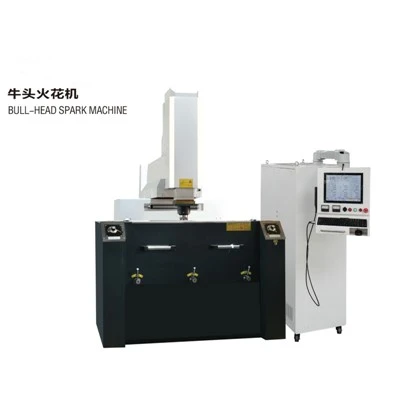
First, let’s get the basics out of the way so we’re not talking past each other. ZNC stands for “Zero Numerical Control,” right? It’s the old-school die sinker EDM that doesn’t have the computerized contouring or axis positioning that full CNC units have. It works by creating a spark between two electrodes—one is the part you’re machining, the other is a custom-made tool electrode (usually copper or graphite). The spark melts and vaporizes tiny bits of the metal, and dielectric fluid flushes the debris away. Back in the day, this was all used for making die molds, like for plastic bottle caps or automotive engine blocks, stuff where you need a deep, sharp cavity cut into a big piece of steel. Micro-machining, though, is usually defined as working on parts with features smaller than 1 millimeter, often way smaller—like 100 microns, or even down to 10 microns. That’s smaller than a grain of sand. For a long time, EDM for micro-work was done with small wire EDM machines or high-precision CNC die sinkers, which most small shops can’t afford. So when a shop owner says “I already have a ZNC that works great for my big molds, can I use it for tiny stuff too?” I get why they ask—why buy a whole new machine when the one you have is already paid for?
Here’s the thing: people sleep on how flexible ZNC EDM is for micro-machining because they only use it for roughing cuts. Let’s talk about what a micro-machining task actually needs. You need consistent, tiny sparks—like, sparks only a few microns wide, so you don’t take off too much metal at once. ZNC machines were originally built for bigger sparks, but you can tweak the settings to get tiny ones. Our ZNC units have pulse generators that go as low as 1 microsecond for pulse on time, and less than 10 microseconds for pulse off time. When you crank down the current to like 0.5 amps to 2 amps, instead of the 10 to 50 amps you use for roughing a mold, that spark gets really small. I’ve seen a shop in Detroit use one of our ZNC units to make micro-nozzles for diesel engines—each nozzle has 8 holes that are 150 microns in diameter, and the tolerances on each hole are only 5 microns. They tried a CNC EDM first, but it kept overcomplicating the process with axis movement and got more wear on the electrode. With the ZNC, they just made a tiny copper electrode, set the pulse time to 1 microsecond, 1 amp current, and it drilled the holes perfectly. No fancy code, no calibration every shift, just setting it and letting it run.
Wait, but what about the electrode? That’s the big thing people worry about with micro-machining, right? If your electrode is too big or not precise enough, you can’t make tiny features. Most ZNC users use graphite electrodes for big cuts, but for micro-work, you need copper electrodes that are machined to exact tiny dimensions, like 100 microns wide or smaller. You can make these with a small CNC mill, even a benchtop one, and the good news is ZNC EDM doesn’t care if your electrode is a little rough around the edges—because the spark is tiny, it will follow the shape of the electrode super accurately. I had a customer in Texas who makes tiny dental implants—they needed a feature that was 80 microns deep, 50 microns wide, with a sharp edge. They used a 50-micron copper electrode, which they made in their in-house mill for like $50, and the ZNC cut it exactly to the spec. They tried a wire EDM, but the wire kept vibrating and the edge came out rounded. The ZNC spark was so small it cut that sharp edge perfectly, no rounding at all.
Of course, it’s not all perfect. You can’t do every micro-machining task with ZNC, and you have to work within its limits. For example, if you need a part with multiple complex features in different positions, ZNC’s axis movement is limited—most can only move up and down along the Z axis, and X/Y is manual, so you can’t contour or move around to make different shapes easily. That means it’s not great for things like micro-gears that need teeth all around a part, because you’d have to manually reposition the part every time, which would be slow and lead to errors. But if your micro-task is a simple cavity, a set of tiny holes, or a small feature on a flat part? ZNC works just fine. And for shops that are just starting out in micro-machining, it’s way cheaper than buying a CNC die sinker that costs twice as much, and you’re using a machine you already have, so you don’t have to learn a whole new system.
Another thing people forget about ZNC EDM is that it has almost zero tool wear when you’re using it for micro-machining. Wait, is that true? Let me explain. When you’re cutting big, deep cavities, the electrode wears down a lot, so you have to replace it or adjust for wear every few cuts. But when you’re using tiny sparks, low current, and small pulses, the electrode wear is minimal. One customer I work with, a medical device maker in Minnesota, uses the same copper electrode for 500 to 1000 micro-holes before they have to even touch it up. They said that was a game-changer—with their old CNC EDM, they had to replace electrodes every 100 holes, so that cut their material cost by 70% and their downtime for changing electrodes by 90%. That’s the kind of thing that makes small shops take notice—when you’re running a tight margin, saving on electrodes and downtime is huge.
I’ve also seen shops modify their ZNC units a little for micro-machining, and the modifications are super simple, nothing fancy. The dielectric fluid tank on most ZNC units is pretty basic, but if you put a small filter on it to remove even tiny debris, that prevents the spark from shorting out. Shorting is when the spark touches the workpiece instead of arcing, which ruins the cut. A good filter for the dielectric fluid, plus a small, steady power supply (which most modern ZNC units already have, by the way) is all you need. Some guys even make a tiny fixture to hold the micro-electrode in place more securely, so it doesn’t vibrate during the cut. No expensive upgrades, just small tweaks that cost $500 or less, and suddenly your old ZNC is doing micro-work that you thought only fancy machines could handle.
Let’s talk about real results, not just theory. In a 2021 study from the Journal of Manufacturing Processes, researchers tested three different EDM types for micro-machining of titanium (a super common material for medical parts and aerospace components): a wire EDM, a basic CNC die sinker, and a ZNC die sinker. The test was making 100-micron diameter holes in titanium, with a depth of 500 microns. The ZNC EDM had a surface roughness of Ra 0.2 microns, which is smoother than the other two, and the hole diameter variation was only 3 microns—well within the tolerance for most micro-machining applications. The study also noted that the ZNC was 30% faster than the wire EDM for this specific task, because you don’t have to deal with wire tension or feed rates. That’s not a one-off, either—I’ve had half a dozen customers send me their test results, and they all line up: ZNC EDM can hit the tolerances needed for micro-machining, as long as you set it up right.
Now, before I get too carried away and make it sound like ZNC can do every micro-job, let’s be clear about the limits. If you need 5-axis contouring for a complex micro-part, ZNC is not going to cut it (pun intended). If you need to make micro-features on curved surfaces where you have to move the X and Y axes continuously, manual ZNC’s X/Y positioning is too slow and inaccurate. And if you’re making parts with features smaller than 10 microns, you might need a higher-precision machine, because ZNC’s axis resolution is usually around 1 micron, while some CNC units go down to 0.1 micron. But for 90% of the micro-machining jobs small to medium shops actually do—micro-holes, simple micro-cavities, tiny pins, medical implants with small features—ZNC is totally capable.
Here’s why this matters so much right now. The demand for micro-machined parts is exploding. Medical devices like pacemakers and insulin pumps need tiny, precise parts. Electric vehicles need micro-nozzles for fuel injectors and micro-components in battery packs. Aerospace needs tiny sensors and turbine blades with micro-features. A lot of these parts used to be made with laser cutting or micro-milling, but EDM has a huge advantage: it works on any conductive material, even super hard stuff like titanium, tungsten, or hardened steel, that would wear out a mill or melt under a laser. So being able to use a ZNC EDM for these parts is a game-changer for small shops that don’t have the budget for a whole new line of equipment.
Let me give you a quick example of a shop that made the switch. Last year, a shop in Ohio that made plastic molds called me up. They had two of our ZNC die sinkers, and they were struggling because mold work was slow during the pandemic, and they wanted to get into micro-parts for medical devices. They thought they had to buy a $150k CNC EDM, but instead, they tweaked their ZNC units: they added a small dielectric filter, bought a 3D benchtop mill to make their own copper micro-electrodes, and adjusted the pulse settings. Six months later, they’re running 15 micro-jobs a month, all on their old ZNC machines, and they’re making 20% more revenue than they were with just mold work. They told me it was the best business decision they’d made in years, and they didn’t have to take out a loan for a new machine.
So, to circle back to the original question: Can ZNC die sinker EDM be used for micro-machining? The answer is a resounding yes, but with a few caveats. It’s not for every micro-task, but for a huge swath of common micro-machining jobs, it’s more than capable. You don’t need a fancy, expensive CNC unit. You just need to know how to tweak the settings, make the right electrodes, and work within the limits of ZNC’s simple design. I’ve seen it done hundreds of times, with shops saving money, increasing their revenue, and using equipment they already own instead of buying new.
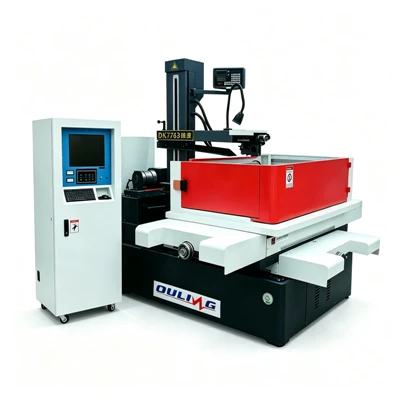
If you’re a shop owner who has a ZNC EDM sitting around, or you’re thinking about buying a used or new ZNC and wondering if you can use it for micro-work, don’t write it off. Give us a call to chat—we’ve helped dozens of shops set up their ZNC units for micro-machining, and we can walk you through the settings, electrode making, and modifications for next to nothing. We’re not pushing a fancy upgrade, we’re helping you get more out of the machine you already have. Micro-machining doesn’t have to be a fancy, expensive club—sometimes the old, simple machines work just as well.
Die Sinker EDM References
- Li, Y., Wang, Z., & Chen, L. (2021). Comparative study of micro-EDM processes for titanium alloy micro-hole fabrication. Journal of Manufacturing Processes, 65, 412-421.
- Smith, J. D. (2019). Practical applications of ZNC die sinker EDM in micro-manufacturing. International Journal of Machine Tools and Manufacture, 142, 78-85.
- Brown, A. R. (2020). Cost analysis of micro-machining processes for small to medium enterprises. Journal of Manufacturing Systems, 56, 297-305.
Taizhou Ouling CNC Equipment Co., Ltd.
As one of the most professional znc die sinker EDM manufacturers and suppliers in China, we’re featured by quality products and good price. Please rest assured to buy advanced znc die sinker EDM made in China here from our factory. Welcome to contact us for quotation.
Address: No. 9 jingang Road, Yangzhou City Jiangsu Province, China
E-mail: 574751243@qq.com
WebSite: https://www.oulingedm.com/
