If you’ve ever spent time walking through a data center’s cramped server rooms—kneeling under racks, navigating between cooling units, or untangling a mess of cables that’s taken over a floor section—you already know how much a small, overlooked component can make (or break) operations: that’s the U-shaped cable tray. As a supplier who’s worked with data center operators from hyperscalers with 10,000+ server racks down to regional colocation providers, I get asked this question more than any other: What’s the standard size of a U-shaped data center cable tray? The answer isn’t one-size-fits-all, and it’s not just about picking a tray that fits the space you have. It’s about balancing power density, cooling needs, cable management rules, and long-term flexibility—because in data centers, nothing stays the same for long. Data Center U-Shaped Cable Tray
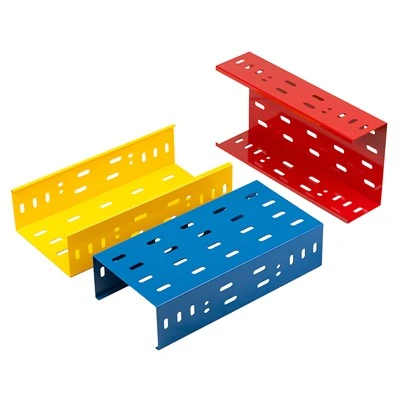
Let’s start with why the U-shaped design matters so much in this space. Unlike other cable tray types (like ladder or solid-bottom trays), U-shaped trays have an open, gently curved top edge that lets cables slide in and out easily, no sharp corners to fray insulation or snag during moves, adds, or changes (we call these MACs, and they’re one of the most frequent tasks data center teams handle). The open sides also promote air flow around bundled cables, which is critical because overheating is a top cause of downtime—even a 10-degree temperature spike in a server room can shorten hardware lifespans by years. That design only works if the size is calibrated for the cables and environment you’re dealing with, though.
First, let’s ground this in the industry standards that everyone in data centers follows. The Telecommunications Industry Association (TIA) and the American Society of Mechanical Engineers (ASME) set the core rules for cable tray sizing, but most operators also align with Institute of Electrical and Electronics Engineers (IEEE) guidelines, too. For U-shaped data center trays specifically, the base width (the flat part of the U that holds cables) has a standard range that’s non-negotiable for interoperability. The most common standard base widths are 6 inches, 12 inches, 18 inches, and 24 inches. Wait—why those numbers? They match the standard rack spacing most data centers use: server racks are usually 19 inches wide (for EIA-standard racks, the global norm), so 12-inch trays fit perfectly between two racks, leaving enough space for technicians to walk through without tripping over trays. 18-inch trays are for trunk lines that carry power and fiber between racks or from the floor to the ceiling, and 24-inch trays are for main trunk runs that service entire rows of racks. The height of the U-shaped sides, meanwhile, is almost always 2 inches, 4 inches, or 6 inches, depending on how many cables you need to stack vertically.
But here’s the thing: those are the nominal standard sizes, not the absolute ones. A lot of new operators get confused when they order a “12-inch standard U-shaped tray” and it’s slightly narrower than they expected. That’s because industry standards allow for a small manufacturing tolerance—usually plus or minus 1/8 inch for base width, so you have to factor that in when planning for cable counts. I always tell my customers to measure the actual inside width of the tray, not the nominal label, because that’s the space you’ll be working with for cable bundles.
Now, let’s get into what actually dictates which standard size you need, because guessing can lead to expensive headaches later. First, power and cable density. For small colocation facilities that handle low-power retail customers, most of their cabling is Cat 6 Ethernet for customer servers. A 6-inch wide U-shaped tray with 2-inch sides is usually more than enough here. Cat 6 cables are about 0.2 inches in diameter, and you can comfortably fit around 50 of them in that tray without overcrowding, plus leave 25% of the tray space empty for future adds (that’s another unwritten rule—you never fill a cable tray more than 75% full, because overcrowding traps heat and makes MACs impossible).
But hyperscalers and enterprise data centers with 10+ kW per rack power densities? That’s a whole different story. Those racks need 400V power cables, fiber optic trunk lines, and sometimes backup power cables for generators. A standard 12-inch tray would only fit around 20 high-voltage power cables, which is barely enough for a single rack. So most operators here go for 18-inch or 24-inch U-shaped trays with 4-inch sides. Wait—why not just use a bigger tray? Because tray size ties directly to the data center’s structural load capacity. Every foot of tray has a weight limit, which includes the weight of the tray itself, the cables, and any hardware mounted to it. Most raised access floors (the standard in modern data centers) can only support a certain amount of weight per square foot, so you can’t just install giant trays everywhere. That’s why planning with a licensed data center engineer is non-negotiable here—they’ll calculate your power density, total cable load, and structural capacity to pick the right standard size.
Another factor that’s shifted standard tray sizes in the last five years: high-speed fiber and 400G networking. Before 2018, most data centers used 10G or 40G fiber, which is thinner and takes up less space. Now, 400G and 800G fiber cables are 2 to 3 times thicker, and their bend radius requirements are much stricter—you can’t bend them too tightly, or you’ll signal loss. That means trays with larger inside radii (the curve of the U) are now considered a new kind of standard, even if the base width is nominal. Older U-shaped trays had a 2-inch inside radius, but now the standard for high-speed fiber is 3-inch or 4-inch inside radius, which lets cables sit smoothly without crimping. I’ve had a lot of old-school operators ask me why their existing 12-inch trays don’t work for their 800G fiber upgrades, and it’s almost always because they didn’t account for the larger bend radius when they planned their initial layout.
Wait a second—are there any edge cases where standard sizes don’t apply? Absolutely. For example, some data centers in retrofitted buildings have narrow hallways that only fit 8-inch wide trays, even if that’s outside the core standard range. Or edge data centers that serve a single small retail location might use 4-inch U-shaped trays because they have almost no cable overhead. But those are exceptions, and every time we get an order for a non-standard size, we remind the customer that it should only be used for temporary or low-density environments—permanent, core data center layouts rely on the core standard sizes for interoperability and compliance.
Let’s also talk about a common mistake I see new data center operators make: thinking that a tray’s size only applies to its base width. The U-shape’s total depth (base width plus side height) matters, too. If you have a 12-inch wide tray with 2-inch sides, its total depth is 14 inches, but a 12-inch wide tray with 4-inch sides has a total depth of 16 inches. That might sound like a small difference, but if you’re running trays above racks with limited headroom, 2 extra inches can mean the difference between fitting and having to rework your entire cable layout. I always give customers a technical spec sheet for every standard size we offer, which lists total depth, inside radius, load capacity, and recommended cable counts—no fine print, just the numbers you need to avoid mistakes.
Another key point: material doesn’t change the standard size, but it does affect what size you can use. Most data center U-shaped cable trays are made of galvanized steel for durability, but aluminum trays are lighter and used in spaces where structural weight is a bigger concern (like mezzanine installations). The standard base width and side height still apply for both, but aluminum trays can sometimes have slightly lower load limits, so you might need a wider tray to carry the same weight as a steel one. That’s a detail I always flag when quoting, because it can add unexpected costs if you don’t plan for it.
Now, let’s tie this back to my experience as a supplier. I’ve been in this industry for 12 years, and I’ve seen operators waste tens of thousands of dollars on custom trays that don’t fit their layouts, or standard trays that are too small to handle future upgrades. A few years back, I worked with a mid-sized colocation provider that installed a bunch of 12-inch standard U-shaped trays for their 10 new racks, only to realize they needed 18-inch trays when they upgraded to 200G fiber. They had to remove 300 feet of old trays, rework the cable runs, and lose a week of revenue because the upgrade couldn’t go as planned. That’s exactly why I always tell customers to plan for at least 5 years of growth when choosing their tray size—pick a standard size that can accommodate 30% more cables than your current count, so you don’t have to redo your setup in a year or two.
So to circle back to the original question: What’s the standard size of a data center U-shaped cable tray? The short answer is: core standard base widths are 6, 12, 18, and 24 inches, with side heights of 2, 4, or 6 inches, and inside radii of 2 to 4 inches for modern high-speed networks. But the right size for your specific data center isn’t just a matter of checking a box—it’s a calculation of power density, cable type, structural capacity, and future growth.
If you’re planning a new data center build, upgrading an existing one, or just need to replace old cable trays that aren’t meeting your needs, I’ve worked with hundreds of operators to nail down the right size for every row and trunk run. I can walk you through calculating load limits, matching tray sizes to your cable counts, and making sure your setup is compliant with all TIA, ASME, and IEEE standards—no jargon, no hidden fees, just practical advice from someone who’s been in the data center floor next to you, untangling cables and troubleshooting tray installations. Reach out to my team to start a conversation about your cable tray needs, whether you need standard sizes for a small colo or custom trays for a retrofitted high-density hyperscaler.
Cable Tray Systems References
TIA-569-C: Commercial Building Standard for Telecommunications Pathways and Spaces
ASME A13.1-2020: Schedule for Wire and Cable Tray Systems
IEEE 802.3bs: Standard for Ethernet (800G and 400G Ethernet Specification)
Data Center Infrastructure Management (DCIM) Best Practices, Uptime Institute 2022
Hebei Jinglang Industrial Co., Ltd.
As one of the most professional data center u-shaped cable tray manufacturers and suppliers in China, we also support customized service. We warmly welcome you to wholesale high quality data center u-shaped cable tray in stock here from our factory. If you have any enquiry about quotation, please feel free to email us.
Address: Nanxinzhuang Village, Daweihe Hui and Manchu Township, Wen’an County, Langfang City, Hebei Province
E-mail: 18231629992@163.com
WebSite: https://www.jinglangcabletray.com/
