Hey there! I’m a supplier of calcined alumina, and today I’m super stoked to chat with you about its applications in catalysts for transition metal compound production. Calcined alumina is like a hidden gem in the industrial world, and its role in making catalysts for transition metal compounds is truly fascinating. Calcined Alumina

First off, let’s quickly understand what calcined alumina is. It’s a high – purity form of aluminum oxide that’s been heated at super – high temperatures. This heating process gives it some unique properties, like high hardness, good chemical stability, and a large surface area. These properties are what make it so useful in the catalyst game.
Adsorption and Active Site Provision
One of the key applications of calcined alumina in catalysts for transition metal compound production is its ability to act as a support material. You see, transition metal compounds often need a stable base to work effectively. Calcined alumina provides just that. Its large surface area is a bonus. It can hold a whole bunch of active transition metal species.
Imagine it as a crowded dance floor. The calcined alumina is the floor, and the transition metal species are the dancers. The more space on the floor (surface area), the more dancers can move around and interact. This large surface area allows for a greater dispersion of the transition metal compounds, which means more active sites for chemical reactions.
For example, in the production of some important transition metal catalysts used in the petrochemical industry, calcined alumina supports the transition metal oxides. These catalysts are used to break down large hydrocarbon molecules into smaller, more useful ones. The calcined alumina keeps the transition metal oxides in place and helps them do their job more efficiently.
Thermal Stability
Another great thing about calcined alumina is its thermal stability. A lot of the processes involved in producing transition metal compounds happen at really high temperatures. You need a material that can withstand these extreme conditions, and calcined alumina fits the bill perfectly.
When the reaction is going on, the temperature can soar, and if the support material isn’t stable, it can start to break down. But calcined alumina stays strong. This stability ensures that the catalyst maintains its structure and activity over a long period of time.
Let’s say you’re making a catalyst for a high – temperature oxidation reaction of a transition metal compound. The calcined alumina support will hold up under the heat, allowing the catalyst to keep working without losing its effectiveness. This is a huge advantage in industrial settings where continuous and reliable operation is crucial.
Chemical Inertness
Calcined alumina is also chemically inert in many cases. This means it doesn’t react easily with other substances in the reaction environment. This is super important when you’re dealing with transition metal compound production.
You don’t want the support material to interfere with the reaction of the transition metal compounds. It could change the outcome of the reaction or even deactivate the catalyst. Since calcined alumina is chemically inert, it acts as a neutral platform for the transition metal compounds to do their thing.
In a catalytic reaction where you’re trying to synthesize a specific transition metal complex, the calcined alumina support will just sit there quietly, not getting involved in unwanted side reactions. It lets the transition metal compounds react with other reagents as they should, leading to a purer and more predictable product.
Shape and Pore Structure Control
We can control the shape and pore structure of calcined alumina during the manufacturing process. This is really useful when designing catalysts for transition metal compound production. Different reactions require different pore sizes and shapes.
For reactions where large molecules need to diffuse into the catalyst, we can make calcined alumina with larger pores. On the other hand, if the reaction involves small molecules, we can create smaller pores. This customization allows us to optimize the catalyst for a specific reaction.
For instance, in the production of a transition metal catalyst used for a gas – phase reaction, we can design the calcined alumina support with a particular pore structure that enhances the diffusion of reactant gases to the active sites on the transition metal species. This improves the overall efficiency of the reaction.
Case Study: Hydrogenation Catalysts
Let’s take a look at a real – world example of how calcined alumina is used in catalysts for transition metal compound production. In the hydrogenation of unsaturated organic compounds, transition metal catalysts are often used. Calcined alumina is commonly employed as a support for these catalysts.
Palladium (a transition metal) is a popular choice for hydrogenation catalysts. When supported on calcined alumina, the palladium particles are well – dispersed on the large surface area of the alumina. This dispersion increases the number of active sites for the hydrogenation reaction.
The calcined alumina also provides thermal stability, which is important because hydrogenation reactions can generate a lot of heat. And its chemical inertness ensures that it doesn’t react with the reactants or products of the hydrogenation reaction. This results in a highly efficient and long – lasting catalyst for the production of saturated organic compounds.
Why Choose Our Calcined Alumina
As a supplier of calcined alumina, I can tell you that our product has some great advantages. We have strict quality control measures in place. This means that you’re getting a high – purity calcined alumina with consistent properties.
We can also offer different grades of calcined alumina depending on your specific needs. Whether you need a calcined alumina with a large surface area for maximum dispersion of transition metal species or one with a specific pore structure, we can provide it.
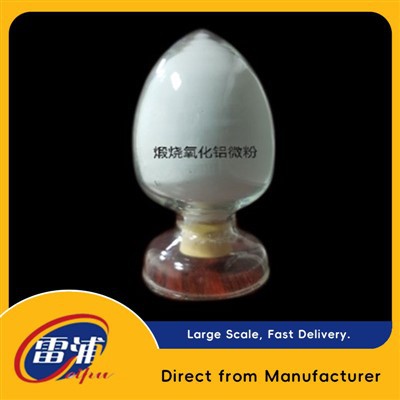
Our team is always ready to help you out. If you’re not sure which type of calcined alumina is best for your transition metal compound production process, we can offer technical advice. We understand the industry, and we know how important it is for your catalysts to perform well.
Let’s Chat
High-purity Alumina If you’re in the business of producing transition metal compounds and need a reliable source of calcined alumina for your catalysts, I’d love to hear from you. We can have a chat about your requirements, and I’m confident that we can find the right solution for you. Whether it’s a small – scale research project or a large – scale industrial production, we’re here to support you. So, don’t hesitate to reach out and let’s start a discussion about how our calcined alumina can take your catalyst production to the next level.
References
- Haber, J. (1991). Oxide supports for metal catalysts. Catalysis Today, 11(1), 17 – 60.
- Thomas, J. M., & Thomas, W. J. (1997). Principles and practice of heterogeneous catalysis. Wiley.
- Ertl, G., Knözinger, H., & Weitkamp, J. (1997). Handbook of heterogeneous catalysis. Wiley – VCH.
Shandong Leipu New Material Technology Co., Ltd.
With abundant experience, we are one of the most professional calcined alumina manufacturers and suppliers in China. Please feel free to buy high quality calcined alumina for sale here and get quotation from our factory. For price consultation, contact us.
Address: Advanced Ceramic Industry Innovation Park, No. 125, Liuquan Road, High-tech Zone, Zibo City, Shandong Province
E-mail: 2330389088@qq.com
WebSite: https://www.sdleipu.com/
