If you’ve ever worked with variable frequency drives (VFDs) on industrial equipment, you know that one of the most overlooked (yet most critical) parts of the installation is properly grounding your VFD cable. I’ve been in this space as a VFD cable supplier for 12 years now, and I’ve seen firsthand how a botched ground job can turn a smooth-running machine into a source of constant headaches—from erratic speed fluctuations to unplanned downtime that costs manufacturers thousands (or even tens of thousands) in lost production. Today, I want to break down exactly how to ground VFD cable the right way, based on both field experience and industry standards, so you can avoid those avoidable mistakes. VFD Cable

First, let’s get one thing straight: why grounding a VFD cable isn’t the same as grounding a standard power cable. VFDs don’t just deliver fixed-frequency power like a regular circuit—they modulate voltage and frequency to control motor speed, which creates rapid, high-frequency voltage spikes and electromagnetic interference (EMI). That interference can wreak havoc on nearby sensitive equipment (like PLCs, sensors, or even other VFDs) if it’s not properly contained. The ground system for VFD cable isn’t just a safety measure (to prevent shock hazards) — it’s also a way to contain that EMI, so it doesn’t bleed out into your facility’s power grid or adjacent devices.
Let’s start with the basics: what kind of ground system do you need for VFD cable? Most industrial settings work with either a TN-S (ground and neutral separate) or TT (local ground rod) system, but the key for VFDs is that your ground path has to be low-impedance at high frequencies, not just at 50/60Hz like standard power systems. That means a thin, long wire (like a traditional equipment ground) isn’t enough—its impedance spikes at high frequencies, so it can’t carry the VFD’s switching current away effectively.
This is where my team gets a lot of questions. We supply VFD cables that are specifically designed for this, with options like copper braid shields, foil shields, or even dual-shield construction—all intended to work with a proper grounding scheme. But even the best VFD cable won’t perform if it’s grounded wrong. So let’s walk through the step-by-step process we’ve refined over thousands of customer installations, and the mistakes I still see people making today.
Step 1: Map Your Ground Points Carefully
The first mistake most people make is connecting the VFD’s ground terminal, the motor’s ground terminal, and the building’s main ground all to separate points. That creates what’s called a “ground loop,” which is a major source of EMI. A ground loop happens when two ground points have slightly different electrical potentials—so instead of the VFD’s switching current flowing directly to ground, it flows through the cable’s shield, creating an alternating current that radiates interference.
Here’s the rule we teach every customer: your entire VFD cable ground path should be a single, continuous run from the VFD’s ground terminal, through the cable’s shield, all the way to the motor’s ground terminal, and then to a single ground reference point in your facility’s main electrical room. That ground reference point should be a dedicated ground bus—not a random steel beam, a water pipe, or a unrelated equipment ground. Water pipes, for example, can have stray current from other equipment, which messes up your VFD’s ground. If you’re installing a new system without an existing ground bus, use a 4/0 AWG copper ground wire (for most VFDs above 5HP) connected to a driven ground rod system with at least two rods spaced 10 feet apart—local codes will specify the resistance limit, but aim for 5 ohms or less.
Wait, what about the shield on the VFD cable itself? That’s a part of the ground system too. For multi-conductor VFD cable, the shield is not optional—it’s designed to carry the high-frequency return current. But you have to terminate that shield correctly. We see people cutting the shield short at the VFD end or leaving it unconnected at the motor end all the time. That defeats the purpose of the shield. The shield should be terminated 360 degrees at both ends, not just a few strands twisted together. Twisting strands creates gaps in the ground path, which increases impedance at high frequencies. For our customers, we include 360-degree shield termination kits with every bulk VFD cable order, because we’ve seen how often that small detail gets skipped.
Step 2: Avoid Gaps and Splices in the Ground Path
Another common error is using multiple splices in the ground run between the VFD, motor, and main ground bus. Every splice adds resistance, and when we’re dealing with high-frequency VFD signals, even a small resistance can cause current to divert to unintended paths (like the cable’s power conductors or nearby equipment). If you have to splice a ground wire or terminate the shield, make sure the connection is rated for the size of the wire/shield, and use a corrosion-resistant connector—ground connections can corrode over time, increasing resistance without you noticing, until you start seeing EMI issues.
Here’s a real example from last year: a food processing plant we supply VFD cable to called us saying their new packaging line’s VFD was tripping intermittently. Their electrical team had connected the ground to a nearby steel support beam (thinking it was a good ground) and had a splice in the 6-foot ground run between the VFD and the beam. When our service tech tested the ground impedance at the VFD’s switching frequency (4kHz, in this case), it was over 20 ohms—way too high. We had them reterminate the ground path to the main electrical room’s ground bus, eliminate the splice, and properly terminate the cable’s shield at both ends. The tripping stopped within 24 hours. That’s the kind of small fix that makes a huge difference.
Step 3: Size Your Ground Wire (and Cable Shield) Correctly
Not all grounds are created equal. The National Electrical Code (NEC) has specific requirements for equipment ground wires for VFDs, but we’ve found that many installers use the same size ground for VFD systems as they do for standard power circuits. That’s a mistake. For VFDs, the ground wire should be sized to match the ampacity of the VFD’s output conductors, not just the input. For example, if your VFD has 10AWG output power conductors, your ground wire should be 10AWG too, not smaller.
And don’t forget the cable shield! Our standard VFD cables have shields rated for at least 100% coverage (some have 95% braid, but the best for high-EMI environments is 100% copper braid). For drives over 50HP, we recommend adding a second shield—dual-shield VFD cable—with a separate drain wire for the shield termination, to further reduce impedance. The shield’s drain wire should be at least 14AWG for small cables, and increase proportionally for larger sizes.
Another note: if you’re running VFD cable and standard control cable in the same raceway, you’ll have extra EMI from the VFD cable, which makes proper grounding even more important. In these cases, the control cable’s shield should also be grounded at both ends, and the entire raceway should be bonded to the main ground bus at the VFD and motor ends—never just one end of the raceway.
Step 4: Test Your Ground After Installation
Installing the ground correctly isn’t a set-it-and-forget-it task. At our company, we tell every customer to test their ground impedance after installation, and then test it annually (more often if the facility is in a harsh environment, like a wet mill or a chemical plant). The test you need is not just a standard ground resistance test (which is for 50/60Hz), but a high-frequency impedance test, at the VFD’s maximum switching frequency. Most basic multimeters won’t do this—you’ll need a specialized ground impedance tester, which most electrical contractors own now.
If your test shows impedance higher than 1 ohm at the VFD’s switching frequency, you have a problem. It could be a corroded connection, a loose shield termination, or a ground loop. I always tell customers to document these test results, so if they start seeing issues down the line, they have a baseline to compare against.
Now, let’s talk about what NOT to do, because I’ve seen these mistakes cost companies so much money:
- Don’t ground the VFD’s ground terminal to the same ground as other high-current equipment. For example, if you have a 100HP VFD next to a welder, don’t connect both to the same ground point. That creates ground loops and shared current paths that cause EMI.
- Don’t leave the cable shield grounded only at one end. Even if you think it’s enough, leaving the shield unconnected at the motor end turns it into an antenna, picking up more EMI than it’s blocking.
- Don’t use a steel conduit as the only ground for the VFD cable. Steel has higher impedance than copper, and if the conduit is not properly bonded at both ends, it won’t carry the high-frequency current away. Use a separate copper ground wire in the conduit, or use armored VFD cable (where the armor is bonded to the ground path) for extra protection.
- Don’t ignore ground maintenance. Every 12 months, especially in dusty or humid facilities, check the shield terminations and ground connections for corrosion. Even a tiny amount of corrosion can double your ground impedance, leading to EMI issues.
As a VFD cable supplier, our goal isn’t just to sell you cable—it’s to make sure that cable works correctly for your application. That’s why we provide free technical support to all our customers, whether they’re installing a 5HP VFD for a small pump or a 500HP drive for a large conveyor system. We’ve worked with hundreds of industrial facilities across North America (and beyond) to troubleshoot ground issues, and we’ve seen that 80% of VFD-related EMI problems come back to incorrect grounding, not faulty cable or VFDs.
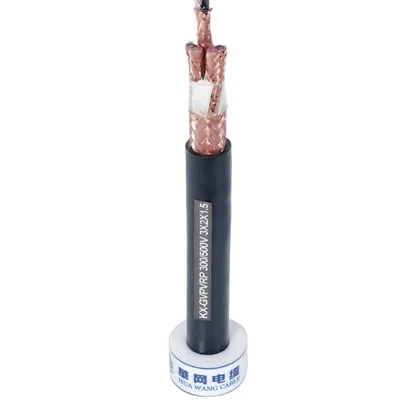
If you’re in the market for VFD cable, or you’re experiencing grounding issues with an existing system, our team can help you find the right cable for your needs, and answer any questions you have about installation. Whether you need bulk VFD cable for a new project, or replacement cable for an old system, we have options designed for every environment—from food and beverage (FDA-approved, oil-resistant) to heavy industrial (high-temperature, heavy-duty). We don’t cut corners on quality, and we stand behind every product we supply.
VFD Cable If you’re ready to chat about your next project, or need help troubleshooting a grounding issue, feel free to reach out to our team to discuss your requirements. We’ll work with you to find a solution that fits your budget and your operational needs.
References
- National Electrical Code (NEC) Article 250, Grounding and Bonding
- Allen-Bradley Technical Note TN-101: Grounding and Shielding for VFD Systems
- International Electrotechnical Commission (IEC) 60364, Electrical Installations for Buildings
- VFD Cable Installation Best Practices, Underwriters Laboratories (UL)
Anhui Huawang Cable Co., Ltd.
As one of the most professional vfd cable manufacturers and suppliers in China, we also support customized service. If you’re going to buy discount vfd cable, welcome to get pricelist from our factory. Quality products and reasonable price are available.
Address: No.32, East Street, Batian Street, Datong Town, Tianchang City, Anhui Province
E-mail: Linda@huawangcable.com
WebSite: https://www.huawang-cable.com/
