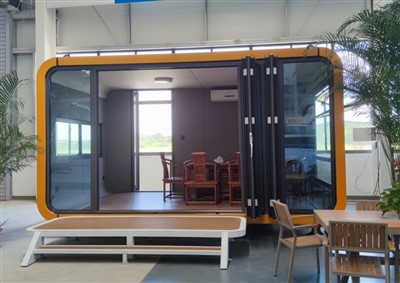
Camp Capsule Space Hey everyone, it’s Jake here from the prefab house team – I get so many DMs and calls weekly that start with “Wait, are those prefab houses actually soundproof?” Like, I totally get why people ask. If you’ve only seen the cheap, boxy prefab setups that pop up at construction sites for overnight crew quarters, you’d think they’d rattle like a tin can in a windstorm. But the reality is way different, and as someone who’s been in this game for 8 years, I’m here to break it down without all the jargon. First off, let’s get one thing straight: not all prefab houses are created equal. Just like how a basic apartment wall isn’t the same as a high-end sound studio wall, the materials and craftsmanship that go into your prefab unit make all the difference. When we build our homes, we don’t just slap a couple of boards together and call it a day. Our wall assemblies aren’t just drywall and insulation – we use two layers of 5/8” type X drywall on both interior and exterior sides, with a 2×6 steel stud frame that’s spaced 24” on center, and then we fill every single cavity with dense-pack Roxul insulation. Wait, for anyone who doesn’t know, Roxul is that stone wool stuff that’s way better at sound and fire than fiberglass. I like to test our panels myself sometimes – last month I stood inside a finished wall mockup while my buddy blared music from the other side, and I could barely make out the lyrics. That’s the real deal, not the marketing fluff you see on some competitor’s sites. Now let’s talk about the numbers, because soundproofing isn’t just about vibes – it’s about decibels. Most standard code-built homes have a STC (Sound Transmission Class) rating of around 30. That means you can hear normal conversation through the wall, no big deal, but if someone’s yelling, you might pick up a few words. Our prefab walls hit a STC rating of 52, and our floor assemblies are around 50. For context, a STC of 50 is basically like having a studio-grade wall – you can’t hear normal talking through it, and even loud TV or music stays on the right side of the wall. I had a customer last year who used his prefab home as a home office and his teen had a gaming setup in the adjacent bedroom. He messaged me a month after moving in saying he had no clue his kid was playing Fortnite for 3 hours straight – that’s exactly what we’re going for. But wait, what about the parts that people overlook? Not just the walls, right? Doors, windows, and the gaps around outlets and light switches are all huge sound leak points. A lot of cheap prefab builders cut corners here – they use thin hollow-core doors and basic single-pane windows, and they forget to seal the gaps in the wall. We do none of that. Our exterior doors are solid-core with a rubber gasket that seals the entire perimeter, and our windows are double-pane, low-E, gas-filled units with a frame that’s airtight, not the old-style aluminum that conducts sound. For outlets, we install acoustic sealant in the gaps around the boxes before we hang the drywall – it’s an extra step that adds like 10 minutes to each unit, but it makes a massive difference. I heard a horror story from a customer once who bought a prefab home from another company, and the neighbors could hear their baby monitor through the wall. When we went to look, the builder had just caulked the drywall corners and called it a day – no sealant around outlets, no double drywall, it was basically a cardboard box. That’s not prefab, that’s just slapdash construction. Now, what about common myths? Let’s tackle the big one: “Prefab houses are just mobile homes.” Nope, never. Mobile homes (or manufactured homes) are built on a steel chassis and are regulated by HUD code, which is way lower than the building code for site-built homes. Our prefab homes are built in a climate-controlled factory, on a permanent foundation frame that’s set on your land, and they go through the same inspections as any site-built home. Also, the way we transport and assemble them has nothing to do with sound. When we build a unit, we make all the wall panels and floors in the factory, then truck them to your lot and set them with a crane. But we seal every single joint between panels with spray foam and acoustic caulk, so there’s no gap where sound can seep through. Another myth: “Thicker walls are always better.” Wait, not exactly – it’s about how the layers interact. If you have two thin drywall layers separated by an air gap, that’s way more effective at blocking sound than one thick layer of drywall. That’s why our walls use the two-layer setup with the steel frame and insulation – it’s not just about thickness, it’s about mass and decoupling. Decoupling is just a fancy word for keeping the two sides of the wall separate, so sound waves can’t transfer through the frame. That steel frame doesn’t connect the interior and exterior drywall, so sound has to travel through the insulation, not just straight through the studs. I’ve had architects come check our units, and they always point out that decoupling trick – it’s a game-changer for sound that a lot of builders miss. What about noise from outside? Traffic, lawnmowers, neighbors’ dogs barking – that’s a big one for people who build in suburban areas or near roads. Our exterior walls are rated to block about 45 decibels of external noise. Let’s put that in perspective: normal traffic is about 70 decibels. So 70 minus 45 is 25 decibels, which is like a quiet library or soft rain. You won’t hear a car passing by unless it’s right on top of your property, and you definitely won’t hear a lawnmower a block away. I had a customer who built his prefab home right next to a busy street in Austin, and he told me after moving in that the only time he notices traffic is when a semi honks super loud – even then, it’s muffled, not like sitting in a site-built home where you’d hear every car. But here’s the thing: even the best prefab home won’t be completely soundproof. Nothing is. A concrete bunker might get close, but that’s not what most people want. We shoot for “quiet enough that you don’t notice outside noise unless it’s extreme, and you can have a conversation without raising your voice through interior walls.” That’s not overkill, that’s basic comfort. I’ve seen so many people make the mistake of buying the cheapest prefab unit they can find, only to end up adding thousands of dollars in soundproofing after move-in. We include the good soundproofing materials as standard, not an upsell – that’s what separates us from the guys who cut corners. Now, let’s talk about common concerns people bring up. What if I have an open floor plan? Oh, that’s a good one. A lot of open concept homes have trouble with sound carrying through, right? If you’re cooking in the kitchen, you can hear every word someone says in the living room, and vice versa. We fix that by adding half-height partition walls in open spaces, with acoustic batting in the gaps, and we use thicker drywall on any shared walls. Also, our floor assemblies have a resilient channel between the subfloor and the finished floor – that’s another decoupling trick. So sound from someone walking on the upstairs floor (if you have a two-story unit) is way quieter than a standard site-built home. I have a two-story model myself, and my roommate watches TV downstairs while I work upstairs – I can barely hear it when I have my own music on, which is exactly what we promise. Wait, what about during construction? Some people worry that prefab construction is faster, so the quality is worse. But building in a factory actually makes soundproofing more consistent, because we don’t have weather delays or crews skipping steps. We can control the temperature and humidity, so the insulation is packed perfectly every time, and the drywall is hung straight with no gaps. On-site, if it’s raining, a crew might rush through sealing the wall joints just to get under cover. In the factory, we take our time – each wall panel gets a full inspection from our quality team before it leaves the shop. That consistency is why our STC ratings are uniform, not hit or miss like a lot of site-built homes. I’ve been in the industry long enough to know that sound is one of the top 3 things people care about when buying a home – right next to price and durability. A home that’s drafty or loud isn’t a home, it’s just a place to sleep. That’s why we’ve spent years refining our soundproofing system, and we still test every batch of panels to make sure they meet our standards. Lately, we’ve even gotten requests for custom soundproofing for home theaters and home offices, so we can add extra mass-loaded vinyl to walls and ceilings for even higher STC ratings – we’ve hit STC 60 for our theater units, which is basically sound studio level. But even our standard units are way above average, and we back that up with a 10-year warranty on structural and sound performance, no fine print. Look, I get that prefab still has a stigma. A lot of people think it’s temporary, or cheap, or not as good as site-built. But when you’re investing in a home, you want something that’s comfortable, quiet, and built to last. Sound is a huge part of that comfort – if you can’t relax in your own home because you hear your neighbor’s dog barking at 2 a.m., or you can’t work from home because your kid’s playing in the next room, what’s the point? Our prefab houses aren’t just boxes you live in – they’re designed to be actual homes, with all the comfort features you’d expect from a high-end site-built home, built faster and for less money. If you’re tired of doing research and seeing conflicting info about prefab soundproofing, hit us up. We can send you samples of our wall panels, or walk you through the exact materials we use, or even connect you with past customers who can tell you about their experience. We don’t do pushy sales tactics – we’d rather answer all your questions so you feel confident about your decision. At the end of the day, a home should be your quiet space, no matter what type of construction it is. And prefab can absolutely deliver that, if you go with the right builder. Don’t let the myths scare you – just ask the right questions, and don’t settle for a builder that cuts corners on the small stuff like sealing wall joints or using cheap insulation. That’s the difference between a home you love and one you end up regretting buying. If you’re ready to chat about your prefab house project, we’re here to help – just reach out, and we can go over all the details, including soundproofing options for your specific needs.
References
ASTM International. (2020). Standard Test Method for Laboratory Measurement of Airborne Sound Transmission Loss of Building Partitions and Elements.
Roxul Inc. (2022). Acoustic Performance of Stone Wool Insulation in Residential Assemblies.
National Association of Home Builders. (2021). Soundproofing Best Practices for Modular and Prefabricated Homes. Prefab House

Shandong Dinglin Supply Chain Management Co., Ltd.
Shandong Dinglin Supply Chain Management Co., Ltd. is one of the leading prefab house manufacturers and suppliers in China, featured by quality products and low price. We warmly welcome you to buy advanced prefab house in stock here and get pricelist from our factory. For customized service, contact us now.
Address: No. 376, Huaguang Road, Fangzhen Town, Zhangdian District, Zibo City, Shandong Province
E-mail: sasha@sddinglin.com
WebSite: https://www.dinglingroup.com/
