In recent years, the field of medicine has witnessed remarkable advancements, with telemedicine emerging as a revolutionary approach to healthcare delivery. Telemedicine leverages telecommunications technology to provide remote medical services, consultations, and diagnoses. As a supplier of rigid endoscope parts, I’ve been closely observing the potential integration of our products into telemedicine applications. This blog post aims to explore whether rigid endoscope parts can indeed be used in telemedicine and the implications of such a combination. Rigid Endoscope Parts

The Basics of Rigid Endoscopes and Telemedicine
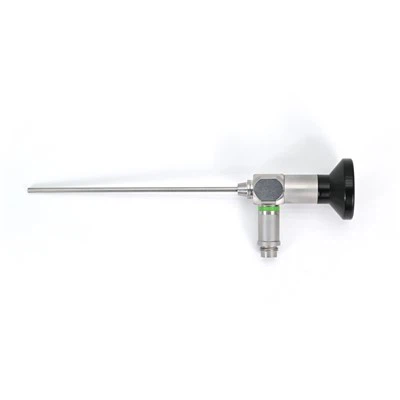
Rigid endoscopes are medical devices used for visualizing the internal organs and cavities of the human body. They consist of a rigid tube with a light source and an optical system, allowing doctors to examine areas that are otherwise inaccessible without invasive surgery. These endoscopes are commonly used in procedures such as gastroscopy, bronchoscopy, and cystoscopy.
On the other hand, telemedicine encompasses a wide range of technologies and services that enable healthcare providers to remotely diagnose and treat patients. This can include video consultations, remote monitoring of patient vital signs, and the transmission of medical images for expert review. The goal of telemedicine is to improve access to healthcare, especially in rural or underserved areas, and to enhance the efficiency of medical services.
Potential Applications of Rigid Endoscope Parts in Telemedicine
Remote Diagnosis
One of the most significant potential applications of rigid endoscope parts in telemedicine is remote diagnosis. By integrating high – resolution cameras and imaging sensors into rigid endoscopes, it becomes possible to capture detailed images and videos of the internal organs. These visual data can then be transmitted in real – time to a remote location, where a specialist can review and analyze them. For example, a general practitioner in a rural clinic can use a rigid endoscope equipped with our parts to examine a patient’s gastrointestinal tract. The images can be sent to a gastroenterologist in a large city hospital for a second opinion or a definitive diagnosis. This not only saves time and travel costs for the patient but also ensures that they receive expert medical advice.
Training and Education
Rigid endoscope parts can also play a crucial role in telemedicine – based medical training and education. Trainee doctors can remotely observe experienced endoscopists performing procedures in real – time. By connecting the endoscope to a telemedicine platform, the live feed of the procedure can be shared with multiple trainees across different locations. In addition, recorded videos of endoscopic procedures using high – quality rigid endoscope parts can be stored in a digital library and accessed by trainees for self – study. This type of remote learning enhances the training experience and allows students to learn from the best in the field, regardless of their geographical location.
Collaborative Healthcare
Telemedicine with rigid endoscope parts can facilitate collaborative healthcare. In complex medical cases, multiple specialists from different fields may need to consult and discuss the diagnosis and treatment plan. By sharing the endoscopic images and videos through a secure telemedicine network, surgeons, radiologists, and pathologists can collaborate in real – time, even if they are in different parts of the world. This multidisciplinary approach can lead to more accurate diagnoses and better treatment outcomes for patients.
Technological Requirements for Using Rigid Endoscope Parts in Telemedicine
High – Quality Imaging
For rigid endoscope parts to be effective in telemedicine, they must provide high – quality imaging. The camera sensors in the endoscopes should be able to capture clear, detailed, and accurate images and videos. This requires advanced optical systems and high – resolution camera chips. Our company invests heavily in research and development to ensure that our rigid endoscope parts meet the highest standards of imaging quality. By using state – of – the – art technology, we can provide products that are suitable for transmitting clear visual data over telemedicine platforms.
Data Transmission and Security
Another important aspect is the reliable transmission of imaging data. The data must be transferred quickly and securely without significant loss of quality. This requires a stable and high – speed internet connection, as well as appropriate data encryption techniques. Our rigid endoscope parts are designed to be compatible with modern telemedicine systems that support high – speed data transfer. Additionally, we understand the importance of patient data security. Our products are compliant with relevant medical data security standards to protect patient privacy during the transmission of endoscopic images and videos.
Compatibility with Telemedicine Platforms
The rigid endoscope parts should be easily integrated with existing telemedicine platforms. This means that they should be able to communicate with the software used for video consultations, image sharing, and remote diagnosis. Our engineering team works closely with telemedicine platform providers to ensure that our products are compatible and can be seamlessly integrated into their systems. This compatibility allows healthcare providers to use our rigid endoscope parts in a variety of telemedicine applications without facing significant technical challenges.
Challenges and Limitations
Technical Infrastructure
One of the main challenges for using rigid endoscope parts in telemedicine is the lack of adequate technical infrastructure in some areas. In rural or developing regions, there may be limited access to high – speed internet, which is essential for the real – time transmission of high – quality endoscopic images. Additionally, the availability of reliable power sources and appropriate medical equipment for operating the endoscopes can be a problem. Addressing these infrastructure issues requires investment in telecommunications and healthcare facilities.
Regulatory and Legal Issues
Telemedicine is subject to a complex set of regulatory and legal requirements. Different countries and regions have different rules regarding the remote diagnosis and treatment of patients, as well as the privacy and security of medical data. Ensuring compliance with these regulations can be a significant challenge for using rigid endoscope parts in telemedicine applications. As a supplier, we are constantly monitoring and adapting to these regulatory changes to provide our customers with compliant products.
Skill and Training Gap
Using rigid endoscope parts in telemedicine also requires healthcare providers to have the necessary skills and training. Not all medical professionals may be familiar with operating endoscopes and using telemedicine platforms. There is a need for comprehensive training programs to educate doctors and nurses on how to use these technologies effectively. Our company offers training and support services to help healthcare providers overcome this skill and training gap.
Conclusion
In conclusion, rigid endoscope parts have great potential for use in telemedicine applications. They can enhance remote diagnosis, medical training, and collaborative healthcare. However, there are several challenges and limitations that need to be addressed, including technical infrastructure, regulatory issues, and the skill and training gap. As a supplier of rigid endoscope parts, we are committed to developing high – quality products that meet the technological requirements of telemedicine. We also strive to provide support and training to our customers to ensure the successful integration of our products into telemedicine systems.
Disposable Surgical Instruments If you are interested in exploring how our rigid endoscope parts can be used in your telemedicine applications, we invite you to contact us for a consultation. Our team of experts will be happy to discuss your specific needs and provide you with customized solutions. We look forward to the opportunity of collaborating with you to advance the field of telemedicine.
References
- American Telemedicine Association. (2023). Telemedicine Best Practices.
- World Health Organization. (2023). Guidelines on Telehealth for Member States.
- Society of American Gastrointestinal and Endoscopic Surgeons. (2023). Endoscopy Technology and Innovation Reports.
Zhejiang Jiacheng Medical Instrument Co., Ltd.
We’re well-known as one of the leading rigid endoscope parts manufacturers and suppliers in China, specialized in providing high quality customized service to global clients. Please feel free to buy discount rigid endoscope parts from our factory. Contact us for more details.
Address: Building 8, Shutai · Fuchun Innovation Park, No. 516, Majia Road, Fengchuan Subdistrict, Tonglu County, Hangzhou, Zhejiang Province, China
E-mail: Ken.huangfu@jiachengmedical.com
WebSite: https://www.jiachengmedical.com/
