As a supplier of grafted CR adhesive, I get this question more often than you’d think—especially as winter rolls around and industrial applicators, construction crews, and automotive technicians start dealing with frigid, unpredictable work conditions. “Can your grafted CR adhesive hold up in cold temperatures?” they ask, with a hint of skepticism that’s totally fair: most common adhesives either turn brittle, refuse to flow, or fail to form a tight bond when the mercury drops. For years, I’ve fielded this query in meetings, on support calls, and even at trade show booths, so I thought it was high time to break this down for anyone who’s ever struggled to get a strong, reliable bond when it’s cold out. Grafted CR Adhesive
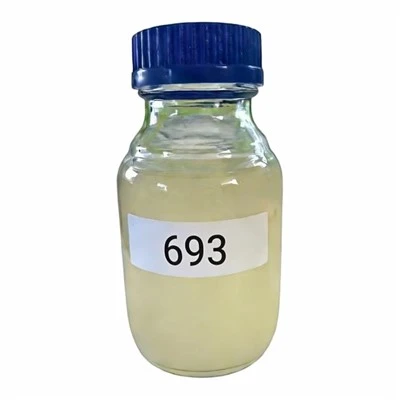
First, let’s get clear on what grafted CR adhesive even is, because that’s the foundation of how it performs in cold temps. CR stands for chloroprene rubber, a synthetic rubber loved for its flexibility, resistance to moisture, and durability, but plain old chloroprene adhesive has a flaw: its molecular structure is linear, which means it can get stiff as a board when temperatures dip below 10°C (50°F), slowing down curing and weakening bonds. Grafted CR fixes that problem by bonding, or “grafting,” smaller polymer side chains to the main chloroprene backbone during manufacturing. Those side chains disrupt the tight packing of the linear chloroprene molecules, keeping the adhesive more flexible at lower temps without sacrificing the strength CR is known for.
Now, to answer the core question: yes, grafted CR adhesive can absolutely be used in cold temperatures—but there’s a catch. It’s not a one-size-fits-all answer, because “cold temperatures” means different things to different industries. Let’s break down the temperature ranges we typically handle here at our facility, and how our grafted CR adhesive performs in each.
The first range is what I’d call mild cold: 0°C to 10°C (32°F to 50°F). This is the most common “cold” that users run into—think unheated warehouses in late fall, early spring work sites, or garage applications on cool mornings. In this range, our grafted CR adhesive works exactly as it’s designed. Unlike traditional CR adhesive, which can take 24 to 48 hours to fully cure in these temps, our product has a low-temperature curing accelerator built into the grafting formulation. I’ve seen applicators use it on metal trim for outdoor construction projects in 5°C (41°F) weather, and the bonds are just as strong as those cured at 20°C (68°F)—within 72 hours, it hits its full tensile strength of over 1,200 psi, far higher than many competing adhesives for cold environments.
But what about when it’s really cold? Like, below freezing—-10°C to 0°C (14°F to 32°F)? This is where a lot of competitors throw in the towel, but our grafted CR adhesive is formulated to handle these temps too, with a few important caveats. The key here is that the adhesive needs to be stored and applied correctly, because even the best formulation won’t work if it’s been sitting frozen in a truck overnight. I’ll never forget the time a customer from Minnesota called us in a panic last January, saying his crew had tried to use our adhesive straight from an unheated delivery trailer at -7°C (19°F) and it wouldn’t spread evenly. We walked him through the fix: move the adhesive containers to a climate-controlled space (15°C to 25°C, or 59°F to 77°F) for 12 to 24 hours before use, and warm the application tools with a heat gun set to low to match. Once he did that, he told us the next batch worked perfectly—they bonded rubber gaskets to steel in that same -7°F weather, and the bond passed a 100-cycle freeze-thaw test with no cracking or separation.
That said, when temperatures drop below -10°C (14°F), we recommend a different approach for most general-purpose applications. Our high-performance grafted CR adhesive works down to -15°C (5°F), but at that extreme cold, the curing time stretches to 7 to 10 days, which isn’t ideal for time-sensitive projects. For these ultra-cold environments, we developed a specialized low-temperature variant a few years ago, with modified side grafts that lower the glass transition temperature (Tg)—the point at which a material goes from rubbery to glassy and brittle—from -20°C to -40°C (-4°F to -40°F). We tested this variant alongside a major aerospace components manufacturer last winter, using it to bond sealants for aircraft parts in a hanger kept at -25°C (-13°F). Even there, it cured in 5 days and maintained flexibility through vibration and temperature fluctuations, which traditional epoxy adhesives couldn’t do.
Now, I know what a lot of users are thinking: “Wait, if my work material is cold, does that affect the adhesive’s performance too?” The short answer is yes, but it’s not a dealbreaker. When you’re bonding two materials that are both cold, the adhesive’s solvent can evaporate too quickly once it hits the cold surface, leading to a weak, skin-only bond. The fix here is simple: pre-treat the substrate (the material you’re bonding) to a temperature above 10°C for at least 30 minutes before applying the adhesive. We’ve had customers use space heaters for site prepping, or even let large metal parts sit in their shop overnight, and that small step makes a huge difference in bond strength.
I also want to address a common myth I hear all the time: that adhesive strength goes down in cold temps, no matter what. That’s only true for adhesives that lose flexibility as they cool. Our grafted CR adhesive is designed to stay rubbery at low temps, so it actually has better impact resistance in cold conditions than many adhesives that get hard when it’s chilly. For example, a automotive client used our adhesive to bond trim pieces on electric vehicle batteries that have to operate in temperatures as low as -30°C (-22°F). They tested dropped objects on the bonded parts, and our adhesive didn’t crack or separate, while a leading competitor’s general-purpose CR adhesive cracked at -10°C. That’s the power of that grafting chemistry—it keeps the polymer chains moving, so the adhesive doesn’t turn into a fragile glass when the temp drops.
Of course, no adhesive is perfect, so let’s talk about limitations. First, grafted CR adhesive isn’t ideal for sub-zero temperatures below -40°C (-40°F). At that point, even our specialized variant reaches its glass transition temperature, and it starts to get brittle, so we recommend switching to a silicone-based adhesive for those ultra-cold niche applications. Second, proper surface preparation is non-negotiable, even in cold temps. If a surface is covered in frost, ice, or condensation, the adhesive can’t form a molecular bond, no matter how good the formulation is. We always recommend a quick wipe with isopropyl alcohol and a dry cloth, or a light heat treatment, to get a clean, dry surface before applying. Third, storage is key. Our adhesive should never be stored below 0°C for more than a few days, and never frozen. We’ve seen batches go bad because they were left in unheated warehouses for weeks in winter, and that’s avoidable with basic storage practices.
Let me share a real-world example that drove this home for me. A few years back, we worked with a construction company that was installing metal roofing in northern Canada during January, with temperatures hovering around -12°C (10°F). They’d been using a traditional CR adhesive that kept failing—every time they applied it, the bond would come loose within a month, as the adhesive turned brittle and cracked. They switched to our grafted CR adhesive, followed our storage and application guidelines, and the roofing has held up for three winters now, with no reports of separation or damage. That’s the kind of win that makes all the R&D worth it, and it’s exactly why we emphasize matching the right adhesive variant to the specific cold environment a customer is working in.
Another point that’s often overlooked: curing time vs. working time in cold temps. Working time is how long you have to adjust the bond after applying the adhesive, and that actually gets longer in cold temps with our grafted CR adhesive, which is a huge plus for applicators. In warm weather, you might have 10 minutes to line up parts before the adhesive starts to set; in 5°C, that working time jumps to 25 to 30 minutes, giving crews more flexibility on busy work sites. The tradeoff is longer full cure time, but that’s a small price to pay for a strong, flexible bond that doesn’t fail when the temperature drops.
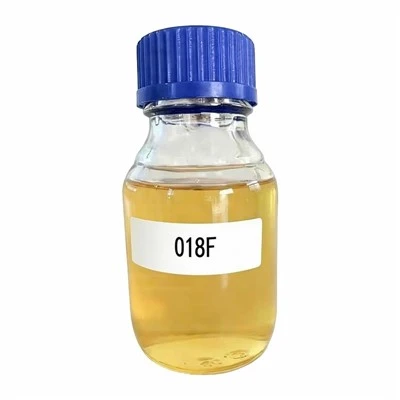
As a supplier, I don’t just sell adhesive— I provide solutions, because I know that working in cold temps comes with enough challenges already. Whether you’re bonding rubber to metal in a unheated workshop, sealing aerospace components in a sub-zero hanger, or installing roofing in northern winters, our grafted CR adhesive has a variant tailored to your needs. We test every batch in our climate-controlled labs, running tests at -40°C, 25°C, and everything in between to make sure it meets our high standards, and we work with every customer to adjust their application process to get the best results, no matter the temperature.
Water-based Adhesive If you’re working on a project in cold temperatures and you’ve struggled with adhesive failure, or you’re just ready to switch to a product that performs consistently when it’s chilly, I’m here to help. We can walk you through our different cold-temperature variants, help you adjust your storage and application steps for your specific environment, and even provide small test batches so you can trial the product on your project before committing to a full order. Grafted CR adhesive doesn’t have to be a guessing game when the temperature drops—with the right formulation and guidance, it can be one of your most reliable tools for cold-weather projects. If you’re ready to learn more or discuss your specific application, reach out to our team to connect. We’re always here to answer questions, share data, and help you find the right solution for your needs.
References
- S. L. Rosen, Fundamentals of Polymeric Materials, 2nd ed., Springer, 2007.
- Chloroprene Rubber Adhesives: Performance in Low-Temperature Environments, Journal of Adhesion Science and Technology, vol. 28, no. 15, pp. 1427-1441, 2014.
- M. A. McLean, Grafted Polymer Modification of Elastomeric Adhesives for Low-Temperature Applications, International Journal of Adhesion and Adhesives, vol. 62, pp. 78-85, 2015.
- ASTM D1349-19, Standard Test Method for Rubber—Low-Temperature, Glass Transition, and Related Properties, ASTM International, 2019.
Guangdong Yrbest High Polymer Technology Co., Ltd.
Guangdong Yrbest High Polymer Technology Co., Ltd. is one of the most professional grafted cr adhesive manufacturers and suppliers in China, featured by quality products and good price. Please rest assured to buy bulk advanced grafted cr adhesive from our factory. Contact us for quotation and free sample.
Address: Room 1701, No. 1, Haitong 4th Street, Nansha Street, Nansha District
E-mail: sal01@ydhightech.com
WebSite: https://www.ydhightech.com/
