Hey there, thanks for stopping by—if you’re here, you probably either already have quartz wall cladding in your space, or you’re about to pull the trigger on it, and you wanna make sure it doesn’t turn into a headache down the line. I’ve been a quartz wall cladding supplier for over 7 years now, and let me tell you: I’ve seen way too many projects go sideways because of small, avoidable mistakes. Today I’m gonna break down exactly what you can do to prevent the most common problems—no jargon, just real talk from someone who’s actually dealt with this stuff day-to-day. Quartz Wall Cladding
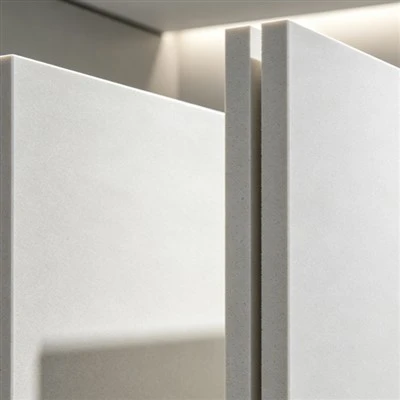
First off, let’s get one thing straight: quartz is super durable, that’s why it’s such a popular pick for wall cladding. It’s scratch-resistant, heat-resistant, doesn’t stain easy… but it’s not unbreakable, and most issues come from how it’s installed, maintained, or prepped before it even gets on the wall. I’ve seen a customer put quartz up in a kitchen, skip sealing (wait, do people even know quartz needs sealing? Wait no—wait, engineered quartz is different from natural quartz, right? Yeah, a lot of folks mix those up. Let’s clarify that quick: natural quartz is mined, so it’s porous, but engineered quartz (the stuff we supply) is like 90% quartz crystals and 10% resin/pigments, so it’s non-porous. Wait, so why do people have staining issues? Oh, right, if the installation surface isn’t clean, or if grout isn’t wiped off right away, that’s the stuff seeping into gaps, not the quartz itself. Got it, let’s not mess that up.
The biggest problem I run into is installation-related failures, and 80% of the time, it’s because the substrate (the wall underneath the quartz) is wrong. A lot of DIYers or even some smaller contractors just use any old drywall, but let me tell you: drywall isn’t rigid enough for large-format quartz panels. If your wall moves a little (like drywall on a stud wall can flex a tiny bit when you lean on it), the quartz panels will crack, or the adhesive will fail, and they’ll start popping off. I always tell people: if you’re installing on an interior wall, use cement backer board, not regular drywall. It’s a little more work upfront, but way cheaper than having to replace half your cladding 2 years later. Also, make sure the substrate is totally flat—even a tiny bump, like a nail that’s sticking out, will create a gap between the quartz and the wall, which traps moisture, leading to mold or mildew behind the panels, or adhesive failure. I’ve had a customer learn that the hard way—he used drywall, installed the quartz, and a year later, panels were falling off. Lesson learned, right?
Next, adhesive choice. This is another big one. I’ve seen people use regular construction adhesive, or even tile adhesive, and that’s a disaster. Quartz is heavy, especially large panels, and regular adhesive doesn’t have enough grab or hold. You need a high-strength, flexible adhesive specifically made for stone or engineered quartz. Wait, and don’t skimp on adhesive—cutting corners here means panels will sag, especially on vertical walls, or crack. Also, when you’re applying adhesive, don’t just slather it on the edges—use the back butter method, where you spread it evenly across the entire back of the panel with a notched trowel, so there’s full contact. That eliminates gaps, which as I said before, leads to moisture issues. I always give a free sample of the recommended adhesive to customers who buy from me, because I know if they use the wrong stuff, their cladding is gonna fail.
Grout is another area where mistakes happen. A lot of people use sanded grout for quartz walls, but wait—quaratz panels have thinner gaps sometimes, right? Sanded grout is rougher, and it can scratch the edges of the quartz when you’re wiping it. Also, if you don’t clean grout off the quartz surface immediately when you’re installing, it dries and etches into the resin part of the engineered quartz. I’ve had customers call me panicking because their grout turned white spots on their dark quartz—turns out they left the grout on for 4 hours instead of wiping it off within 15 minutes. Pro tip: use unsanded grout for quartz walls, it’s smoother, less likely to scratch, and easier to clean off after installation. Also, seal the grout lines, not the quartz. The quartz is non-porous, so sealing it does nothing, but the grout lines are porous, so sealing them prevents stains from spills, food, cleaning products—anything that gets into the gaps.
Then there’s maintenance. A lot of people think quartz is “maintenance-free,” so they just spray any random cleaner on it, like bleach or abrasive scrubbers, and that’s a problem. Bleach can discolor the resin in engineered quartz, especially darker colors, and abrasive scrubs (like steel wool, or scouring pads) will scratch the surface, even though it’s supposed to be scratch-resistant. Wait, let’s be real: nothing is completely scratch-proof. If you drag a metal pan across quartz with force, it’ll scratch, same as any surface. For daily cleaning, all you need is a soft microfiber cloth and warm, soapy water—mild dish soap, not something heavy-duty. For tougher stains, like coffee or wine, a little baking soda paste works, just wipe it off right away. Never use oven cleaners, drain cleaners, or anything with ammonia—those will break down the resin over time, making the quartz look dull.
Another common issue is heat damage, especially in kitchens. Quartz is heat-resistant, but that doesn’t mean you can set a hot pan directly on it for hours. Most engineered quartz can handle up to around 150-200 degrees Fahrenheit, so setting a hot skillet (which can be 400 degrees or more) right on the wall will cause a dull spot, or even warp the resin. I always recommend using trivets or hot pads when placing hot items on quartz cladding in kitchen or dining areas. I’ve had a customer who set a pizza stone (super heavy, super hot) on his quartz backsplash, and it left a permanent dark spot. He tried buffing it out, nothing worked, so he had to replace that section. Small, cheap trivets would’ve saved him a lot of money.
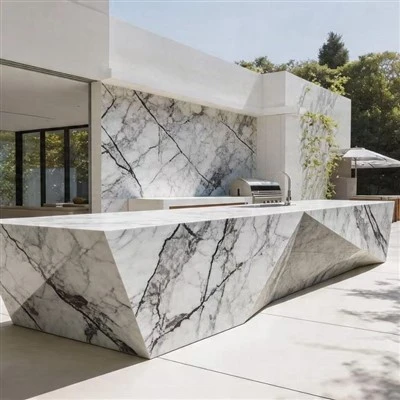
Wait, what about outdoor quartz cladding? That’s a whole other ball game. A lot of people use the same interior quartz for outdoor walls, but outdoor quartz needs to be frost-resistant and UV-stabilized. Regular interior quartz will fade in the sun over a year or two, or crack when it freezes and thaws. If you’re installing quartz on an exterior wall, make sure you get outdoor-grade quartz—we supply that, by the way, it’s made with special resins that resist UV damage and extreme temperatures. Also, outdoor substrate is even more important—use cement board or concrete, not wood, because wood will absorb moisture, warp, and cause the quartz to shift. And for outdoor grout, use a flexible grout, not rigid, because it needs to expand and contract with temperature changes. I’ve had a landscaper install regular interior quartz on a patio wall, and 6 months later, it was fading and cracking—total waste of material.
What about installing large-format panels? A lot of customers go for big panels to make the wall look seamless, but those are harder to handle and install. If you’re using panels larger than 3×5 feet, you need to make sure you have enough support. Maybe add a hidden bracket system, not just adhesive, to hold the panel in place. Large panels can be heavy, so if you’re installing them yourself, get a friend to help—trying to lift a big quartz panel by yourself is a recipe for dropping it, cracking it, or hurting yourself. I always tell first-time installers to start small, like a backsplash, before moving to a full wall of large panels.
Let me also talk about something that’s easy to miss: expansion gaps. Quartz expands and contracts with temperature changes, same as any material. If you butt the panels right up against each other, or against the ceiling/floor, when the temperature changes, they’ll have nowhere to go, so they’ll crack, or buckle. You need to leave a 1/8 inch gap between panels, and a 1/4 inch gap at the ceiling, floor, and corners. Fill those gaps with flexible caulk, not grout—grout is rigid, so it will crack when the panel moves. I’ve seen a full wall of quartz that was installed with no expansion gaps, and after a summer of hot temperatures, the panels swelled and cracked along the seams. That’s such a simple fix, just leaving a tiny gap, and using caulk instead of grout there.
Okay, let’s wrap this up with a quick checklist to make sure you don’t run into problems, no matter if you’re DIY-ing or hiring a pro: 1. Use the right substrate (cement backer board for interior, concrete for exterior) that’s flat and rigid. 2. Use a high-strength, flexible adhesive made for quartz. 3. Use unsanded grout for interior walls, flexible grout for exterior, and seal the grout lines. 4. Leave expansion gaps (1/8 inch between panels, 1/4 at edges) and fill with caulk. 5. Clean with mild soap and water, no harsh chemicals or abrasive scrubbers. 6. Use trivets for hot items, especially in kitchens. 7. Use outdoor-grade quartz for exterior projects.
If you’re still on the fence, or you’re ready to pick the right quartz for your space, feel free to reach out—we’ve helped hundreds of homeowners and contractors pick the right cladding, answer questions about installation, and make sure you have all the products you need to do it right. No hard sell, just honest advice, because I’d rather you be happy with your cladding for years than have to call me back to fix a mistake.
Engineered Quartz Now, references: 1. Natural Stone Institute. (2022). Engineered Stone Installation Best Practices. 2. Quartz Corp. (2021). Outdoor Engineered Quartz Performance Guidelines. 3. Tile Council of North America. (2020). Grout and Adhesive Selection for Stone Cladding.References:
- Natural Stone Institute. (2022). Engineered Stone Installation Best Practices.
- Quartz Corp. (2021). Outdoor Engineered Quartz Performance Guidelines.
- Tile Council of North America. (2020). Grout and Adhesive Selection for Stone Cladding.
Wuhu Junde New Material Technology Co., Ltd.
As one of the most experienced quartz wall cladding manufacturers and suppliers in China since 1998, we warmly welcome you to wholesale top-quality quartz wall cladding made in China here from our factory. If you have any enquiry about cooperation, please feel free to email us.
Address: No.8 Yulin Road, Xinwu Economic Development Zone, Anhui Province, China
E-mail: 1127319898@qq.com
WebSite: https://www.jundequartz.com/
