Hey there, if you’re a shop owner, production manager, or engineer who’s ever had to hunt for a vertical lathe that fits your exact part needs—chances are you’ve stared at a spec sheet and thought, “Wait, how long is this customization actually gonna take?” Vertical Lathe

I get it. When I first started working in this vertical lathe game (almost 12 years ago now), I’d get calls every single week from people panicking about lead times. Some were rushing a big turbine housing order for an aerospace client, others needed a custom tool setup for a new brake line part for their automotive line. The question was always the same: “How long does customizing a vertical lathe take, anyway?”
And the answer? It’s not a one-word number. Like most things in manufacturing, it depends on a whole bunch of moving parts—none of which we skip, because cutting corners here leads to lathes that don’t work right for you, which ends up costing way more time and money down the line. Let’s break this down like I’d explain it to a new shop owner sitting across my desk, no jargon, no fluff.
First off, let’s get on the same page: when we say “custom,” we’re not talking about slapping a new paint job on a standard lathe. That’s just a cosmetic tweak. We’re talking about modifications that actually change how the machine performs for your specific parts. That could mean adding a bigger worktable to hold 10-ton rotor forgings, swapping the standard tool turret for a twin-spindle setup for turning both sides of a part at once, integrating a robotic load/unload system to feed parts directly into the machine, or even tweaking the control software so it syncs with your existing factory workflow.
Now, where does the timeline start? The day we sign off on the final design and you’ve approved all the specs. Before that, we’re just guessing (and we hate guessing). The pre-design phase—talking through your part, your production volume, your space constraints, even your current shift schedule—can take anywhere from a few days to a couple weeks, depending on how fast you can send us your part drawings or specs. But let’s assume we’re past that point, and we’re locked into making your exact custom lathe.
The first big chunk is design and engineering, which usually takes 2 to 4 weeks. Wait, why so long? We don’t just tweak a generic blue line and call it a day. Our in-house engineers are working through every detail: Will that bigger worktable stress the main spindle? Is the robotic arm we’re specifying gonna fit through your shop’s loading door? We run finite element analysis (for the nerds, that’s just stress testing) on every critical component to make sure it doesn’t warp or break under load. If you need a custom control interface that matches your existing machines, that adds a few extra days, because we have to sync that with your team’s software. We send over CAD renderings and sample programs every step of the way, so you’re not surprised when the machine ships.
Once the design is signed off, it’s time for parts procurement. That’s another 3 to 6 weeks, sometimes longer if you’ve got a super unusual custom part. Standard vertical lathe parts are in stock at our warehouse, but if you need something custom—like a special hardened tooling for machining titanium, or a larger spindle motor than our standard offering—we have to order that from our trusted suppliers, who aren’t gonna rush a custom cast part for a table overnight. The lead time here also depends on how many of our standard components we reuse; the more off-the-shelf stuff we can pull in, the faster this part goes. I’ve seen this take as little as 2 weeks if the custom bits are small, and as long as 8 weeks for something really big, like a 15-foot worktable for processing wind turbine parts.
Next up: manufacturing and assembly. This is where the machine starts taking shape. Our shop floor team builds the frame, the spindle, the worktable, all the custom add-ons you ordered, then puts it all together. That’s usually 4 to 8 weeks. Why the range? Simple: how much custom work is there. If you just added a few tool holders and a light curtain for safety, we can knock that out in 4 weeks. If you’re adding a full robotic cell and a custom chip conveyor that matches your shop’s existing scrap system? That’s more wiring, more integration, more time. We test every component as we go, too—we don’t wait until the whole machine is put together to see if the spindle runs smooth. That catches small issues before they become big ones.
Then there’s FAT—Factory Acceptance Test. That’s non-negotiable for any custom machine, and it takes 1 to 2 weeks. We run your exact part on the machine right here in our facility, using your program. We check for precision, speed, how well the custom tools hold up, even how easy it is for your operators to use. If something’s off—say, the robotic load arm is setting parts down a quarter-inch off target—we fix it right here, before it leaves our shop. This step isn’t a delay; it’s the most important part, because it means when the machine gets to your floor, you’re not wasting days or weeks troubleshooting issues that we could’ve fixed before shipping.
After the FAT passes, we take it apart (yes, even big machines get taken down for shipping) and prepare it for delivery. That takes 1 week, then shipping and installation at your shop is another 1 to 3 weeks, depending on how far you are. If you’re local, we can have a crew install it and train your team in 3 days. If you’re across the country or even internationally, shipping takes longer, and installation might take up to a week. And don’t forget training—our service team will come out and teach your operators how to use the custom features, how to maintain the machine, how to troubleshoot small issues on their own. That’s all part of the package, and it’s scheduled to line up with when the machine is ready.
Wait, so adding that all up, what’s the total timeline? Most custom vertical lathes land between 12 and 24 weeks from design sign-off to your team running parts. But here’s the thing: that’s the average. It can be shorter, and it can be longer. For example, if you need a really small tweak to a standard lathe—like just swapping the tool turret for a faster one—we can have that done in 8 weeks, start to finish. I’ve had customers who are in a total pinch, like a shop that had a standard lathe burn out mid-big order, and we pushed a small custom job through in 6 weeks, because we rearranged our shop floor priorities and used in-stock parts. On the flip side, I had a customer a few years back who needed a custom lathe for processing 20-foot gear blanks for offshore oil rigs. That custom table, the special spindle to handle the weight, the heavy-duty chip conveyor—all that took us 38 weeks, almost 10 months. That’s not normal, though; that was a huge, one-off custom build.
Now, let’s talk about the stuff that delays the timeline, because that’s something no one warns you about. The biggest one is customer feedback. If you take two weeks to approve the design when we asked for it in 3 days, that pushes the whole timeline back by two weeks. Or if you realize halfway through that you need an extra feature we didn’t talk about—like a coolant system for machining steel that you forgot to mention—that adds time for design, parts, and engineering. We get it, needs change, but the faster you can loop us in, the faster we adjust and get back on track.
Another big one is supply chain issues. Yeah, that’s still a thing, even post-pandemic. If a supplier for custom motor parts has a 6-week delay, that pushes our timeline back. But here’s the upside: we’ve got 15 years of relationships with our suppliers, so we have backup options for most critical parts. Last year, a supplier messed up an order for a custom worktable, and we had a backup supplier ready within 48 hours, so we only lost 3 days, not 3 weeks.
And then there’s scope creep. That’s when you start with a simple custom job, then add a robotic system, then a custom control, then a second spindle, all halfway through. We love that you’re getting exactly what you need, but adding that stuff mid-stream adds time—so it’s better to talk through everything upfront, even if it takes an extra week or two in the pre-design phase. That way, we’re not playing catch-up later.
I know this all sounds like a lot, but let’s put it in perspective. When you buy a standard lathe off the shelf, you’re looking at 8 to 12 weeks. Custom is longer, but that’s because it’s built exactly for your parts, no compromises. I’d rather tell you it’s gonna take 20 weeks and deliver it in 18 than promise 12 weeks and have to delay because we cut corners on the design or skipped testing.
At the end of the day, our goal isn’t just to build a lathe. It’s to build a lathe that makes your job easier, that cuts down on cycle times, that lets you take on bigger orders without hitting bottlenecks. If you’re curious about your specific project—if you’ve got part specs, or a rough idea of what you need, just reach out. We can walk through your needs, give you a realistic timeline, no fine print, no hidden delays. We can even put together a quick 3D rendering so you can see exactly what your custom lathe will look like before we even start building it.
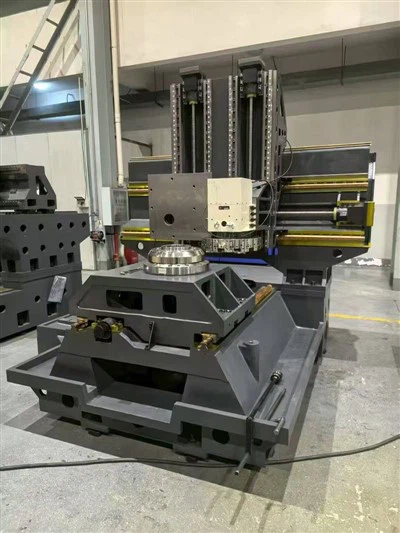
So if you’re tired of lathes that force you to compromise on part size, speed, or workflow, don’t guess at lead times. Hit us up, and let’s talk about what you actually need for your shop. We’ll make sure the timeline works for you, without cutting corners on quality.
References
XYZ Linear Way Vertical Machining Center Manufacturing Extension Partnership. Custom Machine Lead Time Benchmarks, 2023.
American Machine Tool Distributors’ Association. Vertical Lathe Customization Process Guide, 2022.
Society of Manufacturing Engineers. Lead Time Optimization for Custom Production Equipment, 2021.
Smartech Machinery & Equipment Co., Ltd.
As one of the most professional vertical lathe manufacturers and suppliers in China, we also support customized service. Please rest assured to buy bulk vertical lathe made in China here from our factory. Contact us for more details.
Address: Room 2832, Changping Commercial Mansion, Shihua Road, Futian Free Trade Zone, Shenzhen, China
E-mail: smartech@smartechcnc.cn
WebSite: https://www.smartech-cnc.com/
