When I’m out talking to engineers, manufacturers, and plant managers—my core customers as an iron core supplier—one question I get more than any other is this: "What surface treatments do I need for my iron core, and why does it matter?" At first glance, surface treatment might seem like a tiny detail in a whole machine or component. But over 12 years in this business, I’ve seen the wrong treatment turn a perfectly good iron core into a failure, cost a customer thousands in downtime, and even sink a whole project. Iron cores are the backbone of so many industries: transformers, electric motors, inductors, generators, even large industrial pumps. Without a solid surface treatment, they can rust, lose magnetic efficiency, overheat, or wear out way before their intended lifespan. That’s why I want to break down the most common, effective surface treatments I recommend, what they do, when to use them, and what pitfalls to watch for—all from the perspective of someone who sells cores and has seen exactly what works and what doesn’t in the real world. Iron Core
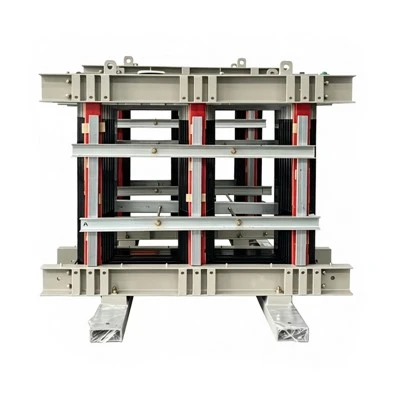
First, let’s start with the basics: why iron cores need surface treatment in the first place. Pure iron is incredibly magnetic, which is why we use it in these applications, but it’s also highly reactive with oxygen and moisture. Left untreated, even a core sitting in a dry warehouse will start to develop a thin, flaky layer of rust over time. Once that rust sets in, it creates a non-conductive gap between the core’s laminations—most cores are laminated, right? We stamp thin sheets of iron and stack them to reduce eddy current loss. If rust builds up between those laminations, it acts like an insulator, which forces more current to flow, makes the core overheat, and cuts its efficiency by 10, 20, even 30 percent in some cases. Beyond that, if the core is going to be used in a humid environment, outdoors, underwater, or even in a factory with acidic fumes, rust isn’t the only risk. Corrosion can eat through the core entirely, leading to catastrophic failure. And for cores that move or rub against other parts—like in motor armatures or rotor cores—wear and tear from friction can erode the iron, reducing performance over time. So surface treatments aren’t just a nice extra; they’re a requirement for almost every iron core we supply.
Let’s start with the most common treatment, especially for laminations and cores used in transformers and general-purpose motors: phosphate coating. I can’t tell you how many times a customer asks for phosphate, and I almost never push back on it as a first option. What is phosphate coating, exactly? It’s a process where we dip the iron core (or the individual laminations before stacking) into a solution of phosphoric acid and other additives. The acid reacts with the iron surface to form a thin, crystalline layer of iron phosphate—usually only a few microns thick, so it doesn’t add any bulk or throw off the tight tolerances we need. That layer does three key things. First, it acts as a rust barrier. The crystalline structure is non-porous enough to keep moisture and oxygen out, while still being porous enough to accept other coatings if a customer wants to add an extra layer down the line. Second, and just as important for magnetic applications, phosphate coating is electrically insulating. It prevents eddy currents from flowing between adjacent laminations, which is the whole point of using laminated cores in the first place. If you skip this step, even a well-made lamination stack will have significant eddy current loss at high frequencies, making the core inefficient and wasting energy. Third, phosphate coating is cheap, fast, and easy to apply—we can do it in batches on our production line without adding a ton of lead time, which is a big plus for customers with tight deadlines.
But phosphate isn’t for every job. I had a customer a few years back who was building offshore wind turbine generators, and he insisted on phosphate coating because that’s what his old supplier used. I advised him against it, and here’s why: phosphate coating is porous. After a few years sitting in salt spray and high humidity, salt and moisture will eventually seep through the layer and start rusting the core from the inside out. The offshore turbine was going to be underwater part of the time, and exposed to 100 percent humidity 24/7. So for that application, we went with epoxy powder coating, a treatment that’s become more popular in the last 10 years for heavy-duty, high-corrosion environments. Epoxy powder is different from liquid paint; we apply a dry powder of epoxy resin to the iron surface, using an electrostatic charge to make the powder stick evenly, then bake the core in an oven at around 400 degrees Fahrenheit. The powder melts and flows into a smooth, hard, fully non-porous layer that’s 50 to 100 microns thick—thicker than phosphate, so it does add a little bit of extra insulation. That thickness is a downside for applications where exact dimensions matter, like small motors or high-frequency inductors, because it can throw off the air gap tolerance we need. But for large cores used in turbines, heavy industrial transformers, or equipment that’s exposed to weather and chemicals, epoxy is unbeatable. It can last 15, 20, even 25 years without rusting, which is exactly what offshore wind operators need when they’re paying to send a maintenance team out to the middle of the ocean.
Another treatment we see a lot, especially for smaller cores used in automotive electronics and consumer appliances, is tin plating. Tin is a soft, silvery metal that’s highly corrosion-resistant, and it’s easy to apply via electroplating. We submerge the iron core in a tin salt solution, run an electric current through it, and tin ions bond to the iron surface in a thin, uniform layer, usually 0.5 to 5 microns thick. Tin plating has two big advantages over phosphate or epoxy. First, it’s electrically conductive, not insulating. That’s perfect for cores that are going to be used in applications where you need good electrical contact between the core and other components, or where insulation between laminations isn’t the main concern. For example, the cores used in laptop power adapters or small electric motor stators in washing machines often use tin plating because it prevents surface rust without interfering with the electrical connections on the core’s ends. Second, tin plating is solderable. A lot of these small consumer devices require you to solder wires directly to the core, and tin plating creates a smooth surface that solder adheres to way better than raw iron or phosphate-coated iron. I’ve had customers in the audio equipment space specifically request tin plating because it reduces signal loss in the transformer cores used in guitar amplifiers and speakers, which is a big selling point for their products. The only real downside to tin plating is that it’s not as good against high temperatures. If a core is going to be exposed to continuous heat over 200 degrees Fahrenheit, the tin layer can start to degrade, turn dull, and lose its corrosion resistance. For high-temperature applications like industrial furnaces or engine ignition systems, tin plating isn’t the right call.
Now, what about cases where we need the best of both worlds—magnetic efficiency and extreme corrosion resistance? That’s when we recommend nickel-iron plating, sometimes called permalloy plating, for specialized applications. Nickel-iron is an alloy with very high magnetic permeability, meaning it concentrates magnetic fields really well, which is why it’s used in high-frequency inductors, medical equipment like MRI machines, and aerospace components where weight and performance matter. We apply it using the same electroplating process as tin, but the layer is a mix of 80 percent nickel and 20 percent iron, usually 1 to 3 microns thick. The magnetic permeability of nickel-iron is so high that it barely affects the core’s magnetic performance, even with the surface coating on it. And it’s far more corrosion-resistant than raw iron or phosphate coating, standing up to humidity, salt spray, and even mild acidic environments. I worked with a medical device manufacturer last year that was building portable MRI machines, and their original core supplier used phosphate coating, which caused the core to lose 15 percent of its magnetic strength after just 6 months of use in humid operating rooms. We switched them to nickel-iron plating, and that loss dropped to less than 2 percent—exactly what they needed to pass their FDA testing. The downside here is cost. Nickel is way more expensive than phosphate or tin, so nickel-iron plating is reserved for specialized, high-value applications, not the standard off-the-shelf cores we supply for general use.
Wait a minute, I should also mention one treatment that’s sometimes overlooked, even though it’s been around for decades: black oxide coating, also called black oxide finish or blackening. A lot of people think black oxide is just for looks, to make a part look sleek, but it actually has practical benefits for iron cores. It’s a chemical process, not an electroplating one—we submerge the core in a heated solution of sodium hydroxide and other chemicals, which reacts with the iron surface to form a thin, black layer of iron oxide, only about 0.5 to 1 micron thick. It’s extremely thin, so it doesn’t affect dimensions at all, and it’s almost invisible to magnetic fields, so it doesn’t reduce magnetic performance like some thicker coatings can. The main benefit of black oxide is that it provides mild corrosion resistance, enough to protect a core from short-term storage or light exposure to humidity, without adding bulk or affecting electrical properties. We often use black oxide as a secondary treatment on cores that have already been phosphate coated, for applications where a darker finish helps with part identification or matches other components in an assembly. The catch is that black oxide isn’t great for long-term exposure to moisture, so it’s never a primary treatment for outdoor or underwater use, but it’s perfect for general-purpose cores that just need a little extra protection during shipping and storage.
Now, let’s talk about some common mistakes I see customers make when choosing a surface treatment for their iron core, because even the best treatment won’t work if you pick the wrong one for your use case. The biggest mistake I see is sacrificing performance for cost. I had a customer in the automotive sector a few years back who was building electric car motor cores, and he opted for a cheap phosphate coating from a new supplier to save 10 cents per core. Within a year, he had 500 motors failing due to rust between laminations, costing him over $100,000 in replacements and downtime. That 10 cent savings ended up costing him way more than if he’d gone with a slightly better phosphate formula from a trusted supplier, or paid for a more durable coating for the high-humidity environment his motors were operating in. Another mistake is ignoring the application’s environmental conditions. A lot of customers will tell me, “This is just a standard motor, so use phosphate.” But if that motor is going to be used in a rice mill, where there’s a lot of fine rice dust and humidity, phosphate won’t hold up. That dust gets into the porous phosphate layer and traps moisture, leading to rust way faster than you’d expect. For that kind of environment, epoxy or even a secondary sealant over phosphate works much better.
Another common pitfall is not accounting for coating thickness when designing an assembly. I once had an aerospace customer who designed a component with a 0.1 mm air gap between the iron core and a permanent magnet. When we supplied the core with standard phosphate coating (around 0.005 mm thick), the assembly fit perfectly. But when they switched to a supplier that used a thicker, lower-quality phosphate coating to cut costs, the total coating thickness added 0.02 mm, which narrowed the air gap just enough to cause magnetic interference and make the whole component fail. The lesson here is: you have to communicate your exact tolerance requirements to your core supplier, and make sure the surface treatment they use stays within those tolerances. Reputable suppliers like me will work with you to adjust coating thickness to meet your exact needs, but you have to ask for it.
As someone who’s been in this business for over a decade, I also want to note that the right surface treatment can vary even for cores that look identical on paper. For example, two transformers with the same power rating, same core size, same material can have completely different treatment needs: one might be used indoors in a climate-controlled basement, so phosphate is more than enough, while the other is used outdoors on a construction site, so it needs epoxy or even a zinc-rich primer under epoxy for extra protection. That’s why I never give a one-size-fits-all answer when a customer asks me about surface treatments. I always ask questions: Where will this core be used? What’s the operating temperature? What’s the expected lifespan? Are there tolerance requirements or electrical conductivity needs? Those details are what let me recommend the right treatment, not just pick the cheapest one.
At the end of the day, iron core surface treatments are a critical part of getting reliable, high-performance components. They protect against corrosion, reduce energy loss, extend lifespan, and even boost magnetic performance when chosen correctly. For me, as a supplier, it’s not just about selling a core—it’s about making sure that core works for your specific application, for years to come. If you’re working on a project right now, and you’re not sure which surface treatment is right for your iron core, I’d be happy to talk through your needs in detail. We supply cores for every kind of application, from small consumer electronics to large industrial equipment, and we work with you to make sure every part meets your performance, durability, and budget requirements. There’s no one-size-fits-all solution, but with the right guidance, you can avoid the common pitfalls that lead to early failures and costly downtime. Don’t hesitate to reach out to discuss your project and find the right surface treatment for your iron core needs.
Transformer Accessories References
- Electrical Steel: Properties, Processing, and Applications, Elsevier, 2019.
- Surface Treatment of Ferrous Components for Corrosion Protection, NACE International, 2021.
- Magnetic Materials: Fundamentals and Applications, Wiley-IEEE Press, 2017.
- Lamination Coatings for Electrical Machines, IEEE Transactions on Industrial Applications, Vol. 52, No. 3, 2016.
- Handbook of Surface Finishing, American Society for Metals, 2018.
Wuxi Zhongpu Electric Co., Ltd.
As one of the most professional iron core manufacturers and suppliers in China, we also support customized service. Please feel free to wholesale bulk high quality iron core made in China here from our factory. Welcome to contact us for pricelist.
Address: No.52 Jiankang Road, Donggang Town, Xishan District, Wuxi City, Jiangsu Province
E-mail: 13585006135@163.com
WebSite: https://www.zhongpuelectric.com/
