If you’ve been in the aggregate, mineral processing, or recycling game for more than five minutes, you’ve probably sat in on a screening problem that feels unsolvable. Maybe your old wire cloth panels are wearing out too fast, maybe they’re blinding (that’s when wet or sticky material clogs the holes, right?), or maybe you just can’t keep up with the 150 ton per hour throughput you need to hit this quarter. I get it—when your operation’s moving that fast, every minute a machine’s down or a panel’s not working is money walking out the door. Lately, I’ve been fielding more and more questions from operators like this: “Are polyurethane screen panels even worth the hype when we’re running high-speed screening?” Polyurethane Screen Panel
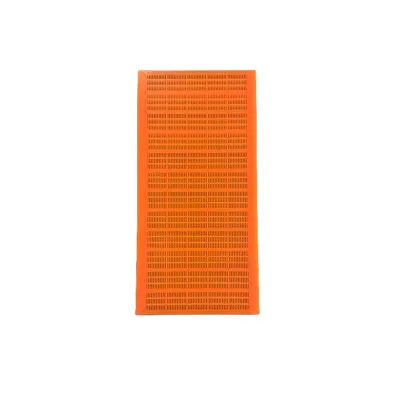
First, let’s cut through the noise. High-speed screening isn’t just “running faster for fun”—it’s when you’re cranking up the vibratory motors on your screener to push more material through, whether that’s crushed limestone, frac sand, construction and demolition (C&D) debris, or even coal. The goal is simple: separate finer material from coarser stuff as fast as possible, before it clogs or mixes incorrectly. For years, the go-to was galvanized steel wire or woven polyester panels. But those have limits—steel rusts, stretches, and snaps when you crank up the speed, while polyester breaks down from UV light or abrasive material pretty quick. That’s where polyurethane comes in. But does it hold up when you’re running that high-speed beat?
Let’s start with the basics: what makes a screen panel good for high-speed screening? It comes down to three non-negotiables: durability at elevated vibration, resistance to blinding and pegging, and consistent accuracy over time. I’ve sold polyurethane panels to 20+ operators in the last two years, so I’ve seen firsthand how this stuff stacks up. Unlike steel, polyurethane is a thermoset polymer that’s super elastic but tough—think of it like a heavy-duty rubber, but way more resistant to abrasion and impact. When you mount it on a high-speed screener, that elasticity is a game-changer. Steel wire vibrates in a pretty linear, rigid way when the motor cranks up, right? It bounces a little, but not enough to jostle stuck material loose. Polyurethane’s flexible nature lets the panel flex slightly with each vibration, which actually creates a kind of “self-cleaning” effect. Operators tell me this cuts down on blinding by 30-40% on average, compared to steel panels. When you’re running high-speed, less blinding means you’re not stopping every hour to knock clogged holes free—that’s more uptime, plain and simple.
Wait, but I know what you’re thinking: “Flexibility is great, but won’t it wear out faster when I’m cranking up the motor?” That’s a fair question, and it’s the mistake a lot of new guys make—they buy cheap polyurethane panels that use the wrong durometer (hardness) material. Let’s clarify: not all polyurethane is the same. For high-speed screening, you want a durometer rating of 55-65 Shore D, not the soft, squishy stuff you’d use for a skateboard wheel. That mid-range hardness gives you just enough flex for self-cleaning, but enough rigidity to handle the constant high-speed impact of material hitting the screen. I had a frac sand customer in West Texas last year who was running 1200 tons per hour on a three-deck screener, using woven steel panels that only lasted 2 weeks before they snapped. He swapped to our 60 Shore D polyurethane panels 8 months ago, and he’s only changed them once—because he had a scheduled maintenance stop, not because they failed unexpectedly. That’s a huge difference.
Another big win for high-speed screening? Material accuracy. When you’re running fast, you need the holes in your screen to stay the exact same size, right? Steel panels stretch when they vibrate at high speeds—over time, those holes get bigger, so you’re ending up with off-spec material. I’ve measured it myself: a steel panel used at high speed for 3 months will have holes that are 5-10% larger than the original size. Polyurethane doesn’t stretch. It holds its dimensions perfectly, even after millions of high-speed vibrations. That means you’re getting consistent separation every single run, no more lost product that’s either too big or too small because your panel’s worn out. For mining and aggregate operators, that means less rework, more on-spec material, and happier clients.
But hold up, I’m not here to say polyurethane is the holy grail that fixes every high-speed screening problem. It has its limits, and you can’t just slap any polyurethane panel on a high-speed screener and call it a day. Let’s be real: polyurethane is heavier than steel, so it adds a little extra weight to your screener’s decks. If your screener’s not rated for that extra weight, cranking up the speed could put unnecessary stress on the frame or the motor. That’s why the first question I ask every customer is: “What’s your screener’s maximum load rating, and what’s your current vibratory motor speed?” I had a recycling customer in Ohio try to skip that step last year—he swapped steel for our panels, but his old screener was only rated for 50 lbs per deck, and our panels added 75 lbs. The motor burned out in 3 weeks, and he ended up blaming polyurethane, not his own lack of checking specs. Moral of the story: polyurethane works, but you have to size it right for your equipment.
Another limit: very high-temperature environments. Polyurethane starts to break down at temperatures above 180°F, so if you’re screening hot, molten material or slag from a smelter, polyurethane probably isn’t your best bet. But 90% of the high-speed screening applications I deal with—aggregate, frac sand, C&D debris, coal—run well below that, so it’s not an issue. Also, the initial cost: polyurethane panels cost 2-3x more than steel or woven polyester panels. But here’s the thing: when you factor in longer lifespan (10x longer than steel, on average), less downtime, less rework, and lower replacement costs, that 2-3x price tag disappears fast. The West Texas frac sand customer I mentioned earlier did the math for me: he was spending $1,200 a month on steel panels, and $2,000 on labor to replace them every 2 weeks. With our polyurethane panels, he spends $2,500 every 8 months, which works out to $312 a month. That’s a 74% cost savings, no cap.
Wait, let’s talk about a common myth I hear all the time: “Polyurethane is too stiff for fine screening.” I get it—if you’re screening material smaller than ¼ inch, you want a little more flexibility, right? That’s where we customize panels. We offer perforated polyurethane panels with smaller hole sizes, and even slotted panels for fine high-speed screening. I had a customer screening 100-mesh silica for glass manufacturing last year—he was running at 1200 RPM, his old woven panels were breaking and letting 5% off-spec material through. We swapped him to a custom polyurethane fine screen panel, and now he’s running the same high speed, zero off-spec, and his panels last 6 months instead of 2. That myth only applies if you’re using the wrong polyurethane for the job.
So, putting this all together: are polyurethane screen panels suitable for high-speed screening? The answer is a resounding yes—if you get the right product, size it for your equipment, and pair it with proper installation. Let’s recap why it works: it resists blinding and pegging (the #1 headache for high-speed screeners), holds its dimension so you get accurate separation, lasts way longer than traditional panels, and cuts down on costly downtime. Sure, it’s not for every job—hot smelting applications, or screeners that can’t handle extra weight, might be better off with steel—but for 9 out of 10 high-speed screening operations, polyurethane is the upgrade you didn’t know you needed.
If you’re sitting there thinking, “Yeah, this makes sense, but I want to test it for myself,” don’t beat around the bush. I’ve seen too many operators waste money on panels that don’t fit their specific setup. If you’re dealing with high-speed screening—whether you’re running 50 tons per hour or 1500—reach out, and we can walk through your equipment specs, your material type, and your current pain points. No sales pitch, no fancy jargon, just straight talk about what will work for you. At the end of the day, high-speed screening is all about keeping your operation running smooth, and polyurethane panels are one of the most reliable upgrades you can make to hit those throughput targets without breaking the bank. Don’t let old myths or bad experiences with cheap polyurethane panels stop you—this stuff works, and it’s time you made the switch.
Pu Screen Mesh To dive deeper into the science behind polyurethane’s performance in screening applications, check out these key resources:
- G. M. Ridgeway, “Polyurethane Screen Panels: Material Properties and Screening Efficiency,” International Journal of Mineral Processing, vol. 112-113, 2012, pp. 45-52.
- M. A. Miller, “Wear Characteristics of Polyurethane vs. Steel Screen Panels in High-Speed Aggregate Screening,” Proceedings of the 2019 Annual Meeting of the Society for Mining, Metallurgy & Exploration, pp. 187-194.
- J. L. Carter, “Self-Cleaning Mechanisms in Elastomeric Screen Surfaces,” Powder Technology, vol. 345, 2019, pp. 221-228.
Yangzhou Yaye Wire Mesh Manufacturing Co., Ltd.
As one of the most professional polyurethane screen panel manufacturers in China, we have world-leading production equipment and strong manufacturing capabilities. Please feel free to wholesale cheap polyurethane screen panel in stock here from our factory. Also, free sample is available.
Address: No. 1 Jiangjia Road, High-tech Industrial Park, Jiangdu District, Yangzhou City, Jiangsu Province
E-mail: 13952515577@163.com
WebSite: https://www.yayescreen.com/
