When I’m on sales calls with hospital facility managers or clinic operations leads, the first question they almost always ask isn’t about price or lead times—it’s about “what makes your power supply good enough for our space?” For way too long, I’ve seen folks in our medical power space treat this like a one-size-fits-all check, or just go off what their colleague bought last year. As a guy who’s been on the supply side of medical & healthcare power supplies for 7 years, I’m here to break down how you actually evaluate quality, without all the jargon that makes your head spin. Medical&Health Care Power Supply

First off, let’s cut the crap: medical power isn’t the same as the power you plug your TV or fridge into. A $200 backup generator for a house can’t sit in a critical care unit. Why? Because if that power cuts out during surgery, or when a patient’s on a ventilator, you’re not just out of a Netflix show—you’re risking a life. That’s the baseline, and every evaluation starts here. Don’t even bother looking at the spec sheet until you know the critical load in your space. I’ve had a dentist come to us thinking he needed a 5kVA supply for his exam rooms, only to realize his sterilizer, X-ray machine, and monitoring tools add up to 3.2kVA. Overbuying wastes cash, underbuying gets you a ticket from the fire marshal. We always start by asking for a load schedule, not just “what’s your power need.”
Next up: the actual build quality that doesn’t show up in the pretty marketing photos. Let’s talk about surge protection first, because hospitals and clinics have so many sensitive, high-precision devices. A standard power supply will let through voltage spikes from the grid—like when the local power company turns on a big industrial compressor—that can fry a ventilator’s circuit board in seconds. Good medical power supplies have what’s called “isolation transformers,” which separate the connected equipment from the grid so spikes never get through. I’ve seen a clinic in rural Ohio avoid a total ventilator failure last year because our supply’s isolation transformer caught a 1,200V spike that the old unit they had couldn’t handle. That’s not a “nice to have”—that’s non-negotiable.
Then there’s durability, especially for units that live in basements, utility closets, or outside HVAC rooms. Medical facilities don’t have time to swap out a power supply every two years. We build our units with rust-resistant steel enclosures, because a damp basement in the Southeast will eat through a cheap aluminum box faster than you can say “code violation.” We also test ours for extreme temps—from 0°F in a Minnesota winter to 120°F in a Arizona summer—because if your unit dies mid-heatwave and your AC kicks out, your patients are in trouble. Last quarter, we had a client in Florida call at 2 a.m. because a competitor’s unit died during a 102°F day, and we had a replacement on-site by 8 a.m. That’s when build quality matters most.
Now, the stuff related to safety and compliance, and no, this isn’t just checking a box. Medical power supplies have to meet way stricter standards than regular power gear. The big ones you need to look for are UL 60601 and IEC 60601. I can’t tell you how many times someone’s bought a “medical-grade” unit that only meets UL 50 (the standard for office equipment) and got shut down by state inspectors during a random check. UL 60601 specifically covers electrical safety for medical devices, and it means the supply won’t leak current that could shock a patient—even if they’re hooked up to a monitor, a defibrillator, or a dialysis machine. That’s not a marketing buzzword; that’s a legal requirement. If a vendor tries to skip over that standard, walk away.
Another thing that people sleep on is monitoring and maintenance. Once you install the power supply, you can’t just set it and forget it, right? Old units would die without warning, and you wouldn’t find out until something went wrong. Good medical power supplies come with remote monitoring—we offer ours through a simple, user-friendly dashboard that lets facility staff see voltage levels, load usage, and even when a part is going bad before it fails. Some units even send text alerts if there’s a power dip. We’ve had a nursing home in Chicago avoid a disruption to their 12 ventilators because their dashboard flagged a minor load issue 24 hours before it would’ve caused a failure. And when it comes to maintenance, look for a vendor that offers local service. I don’t care how good your supply is—if the only technician who can fix it is 3 hours away, that’s useless. We keep spare parts in 12 regional warehouses across the country, and our service team responds to emergency calls within 4 hours, because we know medical facilities can’t wait.
Wait, let’s talk about efficiency, too—because a power supply that wastes energy will cost you way more in electricity bills over its lifespan. A lot of cheap units have efficiency ratings around 80%, meaning 20% of the power you pay for just turns into heat. That’s not only a waste, it adds to the load on your HVAC system, which means higher bills for you and more strain on your facility. Our units hit 95% efficiency at full load, which adds up to thousands of dollars a year in savings. Plus, less heat means fewer breakdowns—simple as that. I always tell clients to do the math: a $5,000 unit that lasts 5 years vs. a $3,000 unit that dies in 2 years and wastes $1,500 a year on electricity. The first one is a no-brainer, but people still go for the cheaper option all the time.
Let’s not forget about compatibility with existing equipment. Most medical facilities have a mix of old and new devices—you can’t just yank out every old machine and replace it with new ones every time you swap a power supply. A good vendor (like ours, obviously) will offer custom outputs, or adapters, that work with whatever you already have. I had a small clinic in Detroit that had a 15-year-old EKG machine and a new ICU ventilator, and we designed a custom power supply that handled both without having to replace either. That saves clients so much hassle and cash, instead of forcing them to upgrade all their gear at once.
Now, let’s get real about common red flags I see all the time. If a vendor won’t give you a sample test report, skip them. If their unit doesn’t have a 5-year warranty, that’s a problem—build quality should last that long, easy. If they can’t explain the difference between isolation transformers and regular surge protectors, that’s a sign they’re selling a box that’s labeled “medical” just to mark up the price. Last year, a client came to us with a unit they’d bought online for half our price, and when we opened it up, it had no isolation transformer, just a cheap surge strip inside. That’s not a power supply—it’s a fire hazard.
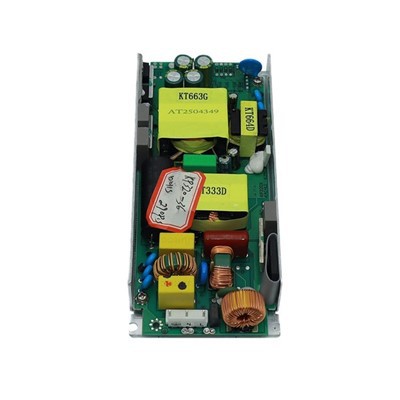
At the end of the day, evaluating medical power supply quality boils down to one core question: can this thing keep your patients safe, and keep your facility running, no matter what? It’s not about the flashiest website or the lowest price. It’s about compliance, build quality, safety features that actually work, and a vendor that’s there when you need them. We’ve been supplying medical and healthcare power for years, and we stand behind every unit we sell. If you’re a facility manager, procurement lead, or clinic owner looking to upgrade your power supply, or just want to make sure the one you have is up to snuff, reach out to our team. We’ll walk through your specific needs, send over test reports, and answer every question you have—no jargon, no sales pitches, just straight talk about keeping your space safe. I’ve seen too many close calls with bad power supplies, and I want to make sure you don’t become one of them. It’s not just about equipment—it’s about people.
Enclosed Switching Power Supply References:
- Underwriters Laboratories. (2020). UL 60601-1: Medical electrical equipment – Part 1: General requirements for basic safety and essential performance.
- International Electrotechnical Commission. (2018). IEC 60601-1: Medical electrical equipment – Part 1: General requirements for basic safety and essential performance.
- National Fire Protection Association. (2022). NFPA 99: Health care facilities code.
- Energy Star. (2023). Product Specifications for Medical Power Supplies.
Guangzhou Kaihui Electronics Co., Ltd.
Address: 2F BLDG8, Standard Ind.Park, Dongchong Town, Nansha District 511453, Guangzhou, Guangdong, China
E-mail: amy@gzkaihui.com
WebSite: https://www.kaihuipowersupply.com/
